"The Klan Whisperer: A Black Man's KKK Robe Collection"


How can you hate me when you don't know me?
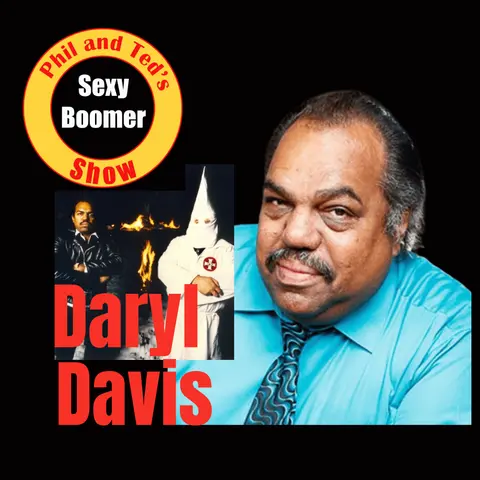
Daryl Davis walks into rooms most people would run from. A Black musician, actor, and author, Davis has spent decades doing something that sounds almost too simple to work: sitting down with Klan leaders and just talking. The result? Over 200 Klansmen have hung up their hoods for good—and more than two dozen have handed Davis their robes as proof. He keeps them, not as trophies, but as evidence of what honest conversation can actually do. Daryl breaks down the psychology of hate, gets real about the tightrope America is walking right now, and makes the case—hard-won and unsentimental—for why he still believes people can change.
Takeaways:
- Daryl Davis, a black man, owns numerous KKK robes as a result of his unique approach to confronting racism.
- Through his efforts, more than 200 individuals have renounced their affiliation with the KKK after engaging in dialogue with him.
- Daryl's childhood experiences abroad fostered a worldview that was initially oblivious to racism, shaping his later pursuits.
- The central question driving Daryl's activism is: How can individuals harbor hate for someone they do not know?
- Daryl emphasizes the importance of finding common ground with those who hold opposing views, facilitating understanding and dialogue.
- His work illustrates that addressing racism requires a cultural shift, rather than merely changing individual minds.
Links referenced in this episode:
Companies mentioned in this episode:
- TED
- The Wire
- YouTube
- Accidental Courtesy
- Daryl Davis, Race and America
- Southern Poverty Law Group
- Mark Potok
- Ku Klux Klan
- Oath Keepers
- Proud Boys
- Simon Wiesenthal Center
- D.C. Stevenson
00:00 - Untitled
00:09 - Introducing Daryl Davis
08:57 - Understanding Racism Through Personal Experience
10:43 - The Journey of Understanding: Confronting Racism and Finding Common Ground
18:59 - Exploring Core Values in Humanity
27:22 - The Rise of the KKK and Its Impact on American Society
36:11 - The Browning of America: Identity and Extremism
Welcome to Phil and Ted's Sexy Boomer Show. I'm Ted Bonnitt.
Phil ProctorOh, I'm Phil Proctor.It's time to introduce another wonderful friend, Daryl Davis, who can be described as an entertainer, an activist, author, actor, a race relations expert, and I'm sure we're gonna hear some wonderful stories. Darrell, how are you doing?
Daryl DavisI'm doing great, Phil. Really appreciate you being with me here today.
Phil ProctorOh, good. I'm so glad. We've been trying to get you on the show for a while, but you are a busy man.
Ted BonnittI spent the evening with you, Daryl, virtually the other night. I watched your TED Talk, which has 13 million views. I watched your bit part in The Wire in season three, which was good.I mean, best show ever on television, I think. And then I watched, of course, the documentary, which is available on YouTube. Anybody can see it.
Phil ProctorAnd that's called Accidental Courtesy.
Ted BonnittDaryl Davis, Race and America. And also the TED Talk, which is only 18 minutes long. Brilliant presentation. Let's just sum it up.Darrell is a black man who owns dozens of KKK robes and hoods.And the reason he does is because he has taken it upon himself to understand racism, hate, and reach out to these people, the very top leadership of the kkk, the grand wizards. And you, remarkably, have forged friendships with these people. And some of them have eventually renounced the KKK as a result of your.At least in part, as a result of your conversations.
Phil ProctorThat's right.
Ted BonnittWhen they quit, they give you their robes, and that's why you have over two dozen robes.
Daryl DavisAbsolutely.
Ted BonnittWhich is an amazing accomplishment.
Phil ProctorI'd like to start at the beginning, and then I have questions, personally. I'm sure Ted has, too, that are related to this path that you seem to have put yourself on.An amazing, amazing, unique, spiritual path, as far as I'm concerned. And it all started because you were raised in basically European schools, right? Because your dad was a diplomat and there was.
Daryl DavisI lived in Europe and I lived in Africa. My dad was U.S. state Department, U.S. foreign Service.So how it works is you get assigned to a foreign country abroad for two years, and at the end of the assignment, you return back home here to the States.You may be here for a few months during the summer, or if you requested a whole year, and then you're back overseas to another foreign country on any given continent. And so I began traveling the world. I'm 68 years old. I was born in 58. I began traveling the world at the age of three, in 1961. My dad was a former.Well, he was one of the first black Secret Service agents in this country.He wanted to be an FBI agent, But J. Edgar Hoover was a racist and a male chauvinist, among many other things, and a female cross dresser, but he had no lamps and no women in the FBI. And so my dad went to the Secret Service, and Harry Anslinger was the head of the Secret Service at the time.And he also had no blacks, but he hired five black guys at the same time. And my dad was one of those. And he rose through the ranks. You know, he got promoted and promoted, but there was a ceiling there for black people.And it got to the point where he was training white agents that were getting promoted over him, of course. So, you know, long story short, he ended up with the. In the foreign service, which also had a ceiling, but the ceiling was a little bit higher.And so that's when we began traveling abroad.Now, here's the interesting thing that most black kids in our country, even today, and white kids even today, did not have the growing up experience that I did. My first introduction to school, Phil and Ted was overseas.I did kindergarten, I did first grade, third grade, fifth grade, seventh grade, all in different schools in different countries. And the in between grades I did back home here in my own country. Right. I was born in Chicago. But the interesting thing is this.My classmates overseas were from all over the world, because anybody who had an embassy station where we had our US Embassy, all of their kids went to the same school. So the little girl sitting to my right might have been from, say, Czechoslovakia.The kids into my left from Nigeria, kid behind me from Japan, kid in front of me from Russia.If you were to open the door to my classroom at any, whether it's kindergarten or grade school overseas, you would say, oh, my goodness, this looks like a United nations of little children. Because that's exactly what it was.
Ted BonnittYou were raised naturally colorblind.
Daryl DavisExactly. Precisely.
Ted BonnittYou were in such a worldly position, such a unique position, so that when you came back and eventually landed in Belmont, Massachusetts, for elementary school, you were blissfully unaware of racism.
Daryl DavisAll the times that I would come back, every two years, I'd come back, right? And I would be in all black schools.Because, listen, segregation was passed by the U.S. supreme Court right, in 54 with Brown versus the Board of Education. That's four years before I was born. I was born in 58.But just because it was passed in 54 did not mean that schools integrated overnight or not even in the next few years. So the first time I was in an integrated School in my own country. I was 1968. I was age 10. All right, and you pointed out.I came back to Belmont one of those times. I was age 10 in the fourth grade, and this school was newly integrated for the first time, 1968.And there were two black kids in the entire school, me in the fourth grade and a little black girl in second grade. So consequently, I wasn't playing with second graders. My friends were fourth and fifth graders, so they all were white.And several of my male friends were members of the Cub Scouts, and they invited me to join, which I did. And I was the only black Scout anywhere in the area. And we had a parade along with the.We were in the Cub Scouts along with the Boy Scouts, the Girl Scouts, The Brownies, the 4H Club, and different organizations. I was the only black participant. The roads were blocked off where we were going to have our parade and the sidewalks on either side.We were marching from Lexington to Concord, which is right next door to Belmont, to commemorate the ride of Paul Revere.
Phil ProctorWow.
Daryl DavisThe sidewalks were lined with nothing but white people. And they were waving and cheering and yelling, the British are coming. And all that kind of thing.
Ted BonnittYour den mother in the Cub Scout made you the flag carrier, so you were prominent.
Daryl DavisI was a flag bearer, yes. I was carrying the American flag, all right. And like I said, people were having fun, waving, smiling, cheering, and yelling, the British are coming.Until we reached a certain point in this parade route when suddenly I was getting hit with soda pop bottles and soda pop cans and small debris from the street by a small group of spectators off to my right on the sidewalk. When I turned to see what was happening, I saw a couple kids, perhaps a year or two older than me, and a couple of adults who were throwing things.I didn't know these people.You know, I'm not from Lexington or Concord, but my first inclination was, oh, those people over there, you know, they must not like the Scouts or something. That's how naive I was, because I had no. You know, I had no precedent for this kind of behavior.
Ted BonnittThe racists are coming. The racists are coming.
Daryl DavisYeah. And those. Those soda pop bottles, you know, for.For the young listeners to your show back then in the 1960s, those things were made out of thick glass, man.
Phil ProctorThat's right.
Daryl DavisYou know, plastic, flimsy stuff we have today. But anyway, it wasn't until my den mother and my Cub master and my troop leader, you know, began running over and covering me with their bodies. Wow.Wow. You know, that I realized, you know, no other Scout Was getting this special protection. So you know, what's going on here?And I kept questioning them, why are they hitting me? Why are they hitting me? Because it seems like, you know, now I realize I'm the target and I'm wondering what had I done?And all they would do was kind of shush me and rush me along without answering the question. So by the end of the parade, I had no answer. So it wasn't until I got home, my mom and dad were at home. They were not at the, at the parade.I guess they had something else going on that day, I don't remember. But anyway, they're, you know, they're seeing me bleeding and so forth, and they're putting band aids and that sticky red stuff we used to have. Ouch.Do they even make that anymore? You're asking me, you know, how did you fall down and get all scraped up? I told them I didn't trip and fall down. I told them what happened.And for the first time in my life, my mom and dad sat me down and explained to me what racism was. Now believe it you all. At the age of 10, I had never even heard the word racism because it didn't exist in my world.You know, I just told you my world was international. And so I had no clue what they were talking about.And what they were saying didn't even make any sense because my 10 year old brain could not process the idea that someone who had never seen me, never spoken to me, knew nothing about me, would want to hurt me for no other reason than the color of my skin. My parents are telling me, yes, I'm saying no way.And to prove to my parents that they were wrong and I was right, I pointed out the fact that my friends at school look just like the people on the sidewalk throwing things. My fellow scouts look just like the people on the sidewalk.My friends overseas, if they're my little French or Danish or Swedish or Finnish or Norwegian friends from their embassies, they look like the people on the sidewalk. Color had nothing to do with it. My parents assured me that it did. Well, then, guess what? April 4, 1968. I remember it well, as do all of you.Martin Luther King was assassinated and every major city in this country, except for one, burned to the ground with violence and destruction. All in the name of this new word I had learned called racism. So now I understood. My parents had told me the truth.This phenomenon I never heard of does exist. But what I did not know was why. And so I formed a question in my mind. Which was, how can you hate me when you don't even know me?And I've been looking for the answer to that question for the next 58 years because I'm 68 now and I was 10 then.
Ted BonnittSuch an important time in life at age 10 to have that kind of an epiphany. And so essentially you were, you came out of a vacuum and you were genuinely astonished at this notion of racism.So it was so fresh and objectively odd to you that it makes sense that it would, would send you off into a lifelong quest to answer that puzzle.
Daryl DavisYeah. And the fact that how come people who look like those people who are not even from my country, treat me better than my own fellow countrymen.
Phil ProctorRight. Good question.
Daryl DavisWell, there you go.
Ted BonnittSo you went deep into this, and by being just honestly curious and not hateful and angry, you were able to do some remarkable things in terms of making contact with so called enemy. How did this all happen?
Daryl DavisYeah, there are two factors that, that, that play in. One, I'm somebody who, who doesn't get furious. I get curious.Okay, number one, but, but number two, you know, to, to your point, if I had grown up here my whole time, from the day I was born and you know, until now or whatever, if I had grown up not being exposed to all the things I was exposed to around the world, and I'm doing all these, all black schools, and then the first time I go to a white school, I have rocks and bottles thrown at me, would I be doing this work today? Maybe not, maybe not. But because I had been exposed to white people long before this happened. This happened at the age of 10.And I've been experiencing white people since kindergarten. So it was an anomaly to me.I can't paint a whole group of people with a broad brush when some white people were treating me well and these few on the sidewalk were treating me poorly.
Ted BonnittGenuinely curious to you as to why there were differences.
Daryl DavisYeah.
Ted BonnittSo how did it get to the point where you now own 26 KKK robes? How did this all happen?
Daryl DavisWell, at this point, I own a lot more, but actually, you know, I never set out to convert anybody, okay?I, you know, and when you see me in the media, whatever the headlines say, you know, black musician converts, you know, 200 Klansmen or white supremacists or whatever. No, that's not true. I didn't even convert one. All right? I am the impetus for over 200 to convert themselves.Now, like I said, I did not set out to convert them all. I set out to do was get an answer to my question. How can you hate me if you don't even know me?You tell me that, and then you go your way, I'll go my way, and hopefully our paths don't cross again because I don't support that ideology. But what happens is this. If you spend five minutes with your worst enemy, you're going to find something in common.And if you spend 10 minutes, you're going to find more in common, and the gap between you is going to narrow. And then you get closer and closer. And now you know, at some point, you found so much in common, you're being cordial with one another.You may not agree with one another. You're being cordial, you may not be going to his or her birthday party or whatever. But then you keep on talking, you find more in common.And now you have caused a cognitive dissonance. Yeah. In that person's brain. And they're thinking, well, what the hell?You know, you have found so much more in common than you have found in contrast.And the trivial things you found in contrast, like skin color or whether you go to a church or mosque or synagogue or a temple begin to matter less and less. And then they begin questioning themselves. Well, how can I hate this person sitting across the table from me? He likes the same things I do.So what I do is I start with things that we may have in common. Like, for example, okay, if I ask you right now, what do you have in common with the leader in the KKK or the neo Nazi movement? You tell me.Absolutely nothing. But then if I say to you, well, do you believe that we need to get drugs off the street and get better education for kids?You say, yeah, well, I say, well, this leader says the same thing. So start there, where you have something in common with somebody who hates you and you build from there.Like sometimes, you know, believe it or not, you know, I'm sitting around talking. You know, we might even get on the topic of movies. So this one clan leader loves James Bond. So do I.You know, before I became a musician, I wanted to be an espionage agent. And James Bond was my hero.To this day, I, I, to this day, I still have my 007 briefcase where you push the handle and plastic bullet flies out of it, shoots out of it, you know. And I got my 007 decoder belt. I mean, it's probably worth a lot of money today, right? I got it when I was a kid. But anyway, I still have it.But anyway, so he likes James Bond. I Like James Bond. He prefers Sean Connery. I prefer Roger Moore. But at least. But at least we both like James Bond.So that's a starting point, you know,.
Phil ProctorIt's a bonding point.
Daryl DavisYeah, exactly. No pun intended, right? Oh, many puns intended.
Ted BonnittThat's Phil's specialty.
Phil ProctorDaryl, I wanna just add an observation of what you made me think. I finally now understand why President Trump has fallen in love with Kim Jong Un or whatever the hell his name is.They both have atom bombs in common.
Daryl DavisYes, indeed. So what's not to love?
Ted BonnittYou know, and the cruelty streak, too.
Phil ProctorYou know, they're very cruel. And torture.
Ted BonnittOne of the things that impressed me watching the documentary is that one of the reasons these folks appreciated you, even though you guys were diametrically opposed, was that you respected them enough to listen. You didn't have to agree, but you listened to what their grievances were. Yes, in principle.Their message of hate and intolerance, of course, is abhorrent, corrupt. But you were able to reach out to them on a man to man level and confront them in a way where, you know, they just couldn't betray themselves.When you were being earnest with them, There was a scene in the documentary where the Klan leader was speaking. And you were there because you went to the meetings. I mean, you are a brave man.
Daryl DavisYeah. Listen, believe it or not, I've spoken at clan rallies and clan meetings.
Phil ProctorOh, wow. I didn't know that.
Daryl DavisWe'll get into that in a little bit.
Phil ProctorOkay.
Ted BonnittThe crowd was heckling you because you had the nerve to even be there. And this leader who was speaking to them gave them a lot of hell.
Daryl DavisYeah.
Ted BonnittAnd said, I have more respect for this man than you. White. N word.
Daryl DavisYeah. That clan leader that you're talking about, when I met him, he was a Grand Dragon, which means state leader.He was, you know, what you and I would call a governor. And then he was a state leader for Maryland. He was the Grand Dragon of Maryland.And then he rose through the ranks and became an Imperial wizard, which means national leader, what you and I would call president, who oversees all the states. So as Imperial wizard, he oversaw 13 states. Today, I own that clan leader's robe and hood.He gave it up and shut down his 13 chapters in those 13 states.
Phil ProctorWow.
Ted BonnittCongratulations.
Daryl DavisWhat I've learned is this, you know, between traveling with my parents as a kid in the foreign service and now as an adult professional musician, I play overseas, I lecture overseas. When you combine those two sets of travels, I've played in all 50 states, and I have been to 65 countries around the world on six continents.Now, what does that mean other than I have a lot of frequent flyer miles and hotel points? It means that I've been exposed to a wide variety of people.People who may not look like me, may not speak my language, may not worship as I do, may not worship at all.But what I have concluded from this is that every single person I have met, whether they are as close as Canada or as close as Mexico or across the Atlantic or across the Pacific, every single person I've met anywhere on this planet is a human being. And as such, every human being wants these five core values. Everyone wants to be loved. Everyone wants to be respected. We all want to be heard.We all want to be treated fairly and truthfully. And we all want the same things for our family as anybody else would want for their family.And if we can learn to apply those five core values or any of those five values, when we find ourselves in an adversarial situation or in a society or culture in which we are unfamiliar or uncomfortable, I'll guarantee you that your navigation of that situation, that culture, that society will be much more smooth, much more positive, and much more productive. Now, I mentioned the travel that I did had a lot to do with my perspective on humanity.And one of my very favorite quotes of all time is by Mark Twain. His real name is Samuel Clemens, but we know him as Mark Twain. He had a lot of great quotes, but my favorite one is called the travel quote.And Mark Twain said, travel is fatal to prejudice, bigotry and narrow mindedness. And many of our people need it sorely on these accounts.Broad, wholesome, charitable views of men and things cannot be acquired by vegetating in one little corner of the earth all one's lifetime. Yep.
Ted BonnittAmen.
Daryl DavisWow.
Ted BonnittYou're listening to Phil and Ted's Sexy Boomer Show. Our special guest today, Daryl Davis, professional musician and actor.But he's best known for what we're discussing, his ability to fight racism by engaging members of the Ku Klux Klan and helping them leave and denounce the kkk. You can see him featured in a documentary that's available on YouTube called accidental courtesy. Daryl Davis, Race in America.One of the things, Daryl, that I noticed the documentary showed people pushing back on you and you having to defend, literally having to defend what you're doing. In one case, you sat down with a senior fellow at the Southern Poverty Law Group, Mark Potok, I believe his name is.
Daryl DavisRight.
Ted BonnittAnd I don't know if you knew him before the interview. But he seemed to look at you like as a curiosity.
Daryl DavisHe was interviewed a couple years before the documentary, and he was asked about me, and he more or less implied that I was a clown or something. But, you know, I. You know, I don't have any animus towards Mark Potok. He did not like me so much.And in the documentary, you know, you heard him say that I was retail and he was wholesale or something. He said his job is not to sit down and have coffee with the Klan, but to destroy the Klan.
Ted BonnittHe said, I'm here to kill off hate groups. Yeah, and he characterized your work as retail strategy and their work as wholesale strategy because, quote, we can't wait around.
Daryl DavisRight, exactly.
Ted BonnittI get that, and I admire their work, but there was hostility and intolerance in that remark, and that sort of betrayed what your whole thing is.
Daryl DavisWell, you know, the whole thing. I mean, there are many different avenues to addressing a problem. You know, I have one, and I've proven that it works.He has another one, and he's proven that, you know, that his works to a certain degree. But, you know, let me put it this way. Okay, so let's take Rosa Parks and the bus incident, right, where she wouldn't give up her seat. All right?So Martin Luther King organized a boycott, and the buses were riding around empty, you know, burning up gas and not making any money for a year. And then they finally changed the law. Okay? Black people can sit wherever they want to sit on the bus. All right? So the day that law was.Because before, it was against the law for a black person to sit in the front of the bus. That was the law. You get arrested. That's why she got arrested. All right, so the law changed on the day the law changed.That did not change the attitudes of the other white writers, you know, just because the law change. So when Mark Potok sues the Klan, that doesn't mean all of a sudden and he wins. That does not mean that. That the Klan loses their hatred.It simply means that they lost some money, which. Which makes them even madder and even more hateful. Okay?So when I sit down with them and I provide them an education and a reason to rethink their ideology, that's a lot longer lasting, a lot more beneficial. Now, I'm not saying his legal actions shouldn't be done.Yeah, you hold people accountable if somebody does something and destroys somebody's property or hangs somebody from a tree and all these things that he is sued for. Yes. I appreciate them taking them to court and putting them in jail or prison for the rest of their lives or holding them accountable. Absolutely.And that is a strategy. You have to be accountable for the crimes that you commit to. Okay, but you all, you know, prison and things like that and money are penal.Are penal penalties. You know, you're penalizing somebody.
Ted BonnittRight.
Daryl DavisAnd, you know, but I'm trying to reform.
Ted BonnittRight. I just don't understand why here you are building bridges and addressing hatred in a peaceful way. Why aren't they complimentary?
Daryl DavisThat's a question from Mark Potok. I can't. I can't answer that for him.
Ted BonnittThe other pushback that was illustrated in the documentary took place in Baltimore with.
Daryl DavisThe Black Lives Matter people.
Ted BonnittYeah. Two young black gentlemen who were young and idealistic and full of fire, and boy, did they give you a hard time. And then.And you didn't even spar with them. You were just trying to engage. And then some older black gentleman came down and sat down and just read you the ride out and then walked out.It was like they were so intolerant of your work.
Phil ProctorThey were intimidating.
Daryl DavisI was not intimidated by them.
Ted BonnittNo.
Daryl DavisBut, you know, so let me say this. Yes. And I wanted to keep that in there to show because, you know, a lot of people think, you know, all black people think alike. Well, no, we don't.We're not monolithic. You saw black people in the documentary that supported me. Some guys I ran into at Howard University, my alma mater, who supported me.And then you saw those guys you're talking about who absolutely did not support me. Now, let me say this about that. No one group has a monopoly on racism. And that's why I wanted to keep that in the documentary.The segment that you saw in the documentary was only eight minutes long. That scene, believe it or not, went on for about an hour. We couldn't include the whole hour. And it almost ended up in physical violence.Now, about a year later, they reached out to me and they said, hey, we've been seeing you on tv. We've read some interviews with you. We don't agree with everything, but we see where you're going with this, and we agree with some of the things.We think we can work together. Can we get together and have dinner and talk? I said, sure.So I drove to Baltimore, I met up with them, and we had a nice dinner together, had a nice conversation. Much different than what you saw in the documentary. And that's also on YouTube if you want to see it somewhere.But anyway, we started working together. And then the older guy, the one that you're talking about who read me the riot at.We started working together and then he fell off the wagon, so to speak, and reverted back to how he was in the documentary. So that ended that relationship. But, you know, no one has a monopoly on racism. And he has his method of addressing it.I have mine and Mark Potok has his. You know, the main thing is it needs to be addressed. And there's. And there's no one. You know, one shoe fits all.
Phil ProctorNow, I don't know if you know this, Darrell, but on my one side of my family, my grandfather was a state senator of Indiana, Robert E. Proctor. Right. And he was responsible for basically uncovering the Ku Klux Klan in northern Indiana.And, and when I was a kid, I had for a while in my possession one of the Klan books with all the rituals in them, talking about Cloran. Right.And so there was, you know, even though Indiana really is, you know, pretty much an all white state now, my grandfather helped to confront racism.
Daryl DavisWell, you know, Indiana, yeah.
Ted BonnittGround zero, man. Ground zero.
Daryl DavisYes, it was. Yes.Indiana had the most KKK members of any state at one time, back in the, in the late 1920s and through the 30s with their imperial wizard named D.C. stevenson.
Ted BonnittWow, bad dude.
Daryl DavisYeah. He got in trouble for, for murdering a, a female reporter. And D.C. stevenson made governors and made senators and made, you know, mayors half it.You know, the Klan reached, reached an all time high of like 4 million people, with Indiana having 1 million by itself.
Phil ProctorMy goodness.
Ted BonnittYou end this movie, which was produced and distributed in 2016, just as Trump was coming in for the first time.
Daryl DavisYeah.
Ted BonnittYou said in the documentary that you thought this would be hopeful in the sense that it would finally put this hatred in the spotlight. People would see it for what it was and rebel against it.
Daryl DavisExactly.
Ted BonnittAnd here we are now 10 years later in a second Trump term, and.
Daryl DavisI say the same thing, okay? I said in the documentary that I think Donald Trump is the best thing that's happened to this country. I did not vote for Donald Trump.I would never vote for Donald Trump. I played for him one time, many, many years ago, before he ever got into politics. But I am not a fan of Donald Trump.But he is the best thing that has happened to this country because he has put this nonsense, this racism, his own racism, narcissism, male chauvinism, whatever. In our face, okay? People, unfortunately, Americans are not as proactive as we should be. We're more reactive, all right?And we have the opinion, if I don't see it, if I turn A blind eye to it, then it doesn't exist. We had a black president. Racism is over. No, it's not. You know, but that, you know, that's the mentality with Donald Trump.He has allowed people to take off their masks, right, you know, and storm the Capitol and, you know, show their faces and then get pardoned for it and so forth and so on. So he's. So now, you know, we can no longer turn a deaf ear or a blind eye because anywhere you turn is there. So now we are forced to confront it.That's why I say this is the best time. For example, you guys are in, say, Los Angeles and you're gonna vacation. You're going to drive. You're going to drive to Las Vegas or something.If, you know, if you get 10 miles out of Los Angeles and your car starts knocking and making weird noises, you say, whoa, whoa, you know, let me turn around and go to my mechanic. I don't want to get stranded out in Nevada somewhere. My car breakdown.So you turn around, go back, you get your mechanic, you say, hey, man, you know, would you drive my car? Let me ride with you. Go around the block and figure out where this noise is. He gets in the car and you ride around the block and there's no noise.And he tells you, I can't fix what I can't hear. Right? So that's the attitude that we've had. If I don't see it, I don't hear it, then we can't fix it. But now it's everywhere. You cannot escape it.So now we can fix it because it's in our face, it's in our ears. So this is the best time. And we are resilient people. We can do this.
Ted BonnittThere's a tremendous amount of racism in this administration.
Daryl DavisYes, there is.
Ted BonnittEven that's being overshadowed by what really can be legitimately termed for fascism.
Daryl DavisYes.
Ted BonnittDenouncing Canada as a 51st state.
Daryl DavisLet me tell you about, about Canada. Okay, remind me. Hold that point one second. I'm going to tell you what's going on here, guys. I listen.In 19, I went to a high school in Rockville, Maryland, okay? And we. In 1974, I was a sophomore. Age, age 15, all right? And I was taking a senior class.It was called the POTC, which stood for Problems of the 20th Century. We had a fantastic teacher.He would bring in controversial or bring in speakers to speak about controversial topics like abortion or things like that to our class. And we could question the speaker, et cetera.Well, on this one, day in 1974, in our PLTC class, our teacher brought in the head of the American Nazi Party. All right? Now, you could never do that today. I wish we could. I really wish we could do that.But because of political correctness, which I do not support, we cannot do that.
Ted BonnittBerkeley was a perpetrator of that.
Daryl DavisOkay, so the founder of the American Nazi Party was a fellow named George Lincoln Rockwell. And he was a big proponent of the ideology of Hitler. He founded it in Arlington, Virginia, right across the Potomac river from the White House.All right? And he was murdered by one of his own Nazi members, guy named John Palter.So Rockwell's right hand guy, whose name was Matt Cole, K O E H L took over the American Nazi Party. Matt Cole came to my high school that day in 1974. He stood at the front of my class.He pointed at me and pointed at another black kid in the class and said, we're going to ship you back to Africa. And then he made a sweep.Then he made a sweeping motion with his index finger across the room, and he said, and all you Jews out there are going back to Israel. I just sat there looking at this guy like, what on earth is this man talking about?Well, one of my classmates piped up and said, well, they live here. What if they don't want to go? And Matt Cole said, oh, they have no choice.If they do not leave voluntarily, they will be exterminated in the upcoming race war. That was the first time I heard the term race war. And that propelled me to learn more and more and more about this. So now fast forward, right?I graduate two years later from high school. I graduate four years after that from college in 1980. So two years later, I went looking for Matt Cole. I want to find this.I've been doing this now for 47 years, man. I went looking for Matt Cole. I found him. And I had a long conversation with Matt Cole. He remembered me from high school.
Ted BonnittWow, okay.
Daryl DavisHe remembered me from coming to my. Yeah, because only eight years had passed, but he remembered me, and we had a long conversation.He told me a lot of lies, but one thing he told me was true. I've been following it ever since 1982 when I talked to him, all right?He told me that white supremacists are fearful of the year 2042, which is only, what, 15 and a half years from now. All right? I asked him to explain that. And he's right. You know, he was wrong about a lot of other things, but he's right about this.You know, you guys are old enough to know the term white flight. Well, if you ask them, some young kid, what is white flight, they never even heard of it.Because the color of the American landscape has changed so much that anywhere you try to fly to anywhere you try to go, there's already somebody there that doesn't look like you. So white flight is over right now. When I was a kid growing up, one of my heroes was Simon Biesenthal. And after I graduated college, guess what I did?I went to Vienna, Austria, and I had dinner with Simon Wiesenthal. Yes, I did. And I picked his brain. I sat there with him, picked his brain about this stuff. You know, he was an inspiration to me.He was one of my heroes. Unfortunately, he's gone now.And even to this day, I do a lot of work with the Simon Wiesenthal center, both in Los Angeles or Chicago, the Midwest one. But he was a great inspiration to me. So Matt Cole told me they were fearful of 2042, and our U.S. census is taken every decade.And you can check me, just go to uscensus.gov or whatever and you'll see the trend. I'm 68.When I was a child, the black population in this country was 12% Native American Indians, 1% Latino, Hispanic Americans, 2% Asian Pacific Islander Americans, 3%. Whites were like 86, 87% today. The last census taken was in 2020. The next one will be 2030. Today, blacks remain at 12%, 12.9%, so they say 13%.Native Americans remain at 1%. Asian Pacific Islanders have doubled to almost 6% Latino. Hispanic Americans have more than quadrupled 17 point something percent.So if you take just say 13% black, 17% are Latino, Hispanic, that right there is 30% non white. Right. And so you know, that gap is narrowing. In 2042, this country, for the first time in its history, will be 50, 50, 50% white, 50% non white.Between 2045 and 2050, whites will become the minority in this country for the first time. There are plenty of white people in this country who don't care, who say, hey, that's no big deal. Doesn't bother me. That's evolution.What's the big fuss? But there is another slice of our population, the ones that I deal with who do care.And what they are telling me is, Darrell, I don't want my grandkids to be brown. They call it the Browning of America or white genocide through miscegenation.And when I first started this work, there were only like about three Groups. There was the Ku Klux Klan, the Neo Nazis, and the White Power skinheads.Today you got the Klan, the Nazis, the skinheads, the Oath Keepers, the Proud Boys, the vanguard, the Patriot front, on and on and on. And they're all saying, come join the gop. And they're all saying, come join us. You know, we're going to take back our country.So people, out of fear of having their identity erased, you know, are running and joining these groups. And then when the group does not take back the country in a timely fashion, some of these people get antsy and say, you know, what?If the Klan can't do it or the alt right can't do it, I'll do it myself.And that's when they walk into a black church in Charleston, South Carolina, and murder nine black people doing Bible study, or the Tree of Life Synagogue in Pittsburgh and murder 11 Jewish people conducting religious services. Or the Sikh Indian temple, Oak Creek, Wisconsin, murder seven Sikh Indians in their temple services.Or the Buffalo grocery store, the Walmart in El Paso. All these things, these are called lone wolves.We're going to see, unfortunately, more and more of these lone wolves as we get closer and closer to 2042, because they are becoming unhinged. And I know some of these people, and they truly believe, they truly believe that they are patriots in their minds.We discovered this country, we built this country, we wrote the Constitution, and people are coming here who don't look like us moving us out of our country. So they're bound and determined to have a race war and defend their country.Now, why do you think Donald Trump wanted Canada to become the 51st state?
Ted BonnittLots of white people.
Daryl DavisExactly. In order to increase that gap because of 2042. That's the reason right there.
Ted BonnittThe whole notion of race blending there.The rationale that you often hear and heard in your documentary is that, hey, we're just trying to preserve our race, just like other races are trying to preserve their races. It's not like we're trying to extinguish other races. We're just trying to protect ours.
Daryl DavisYeah, but here's the problem with that, and this is where we are very ignorant. See, a lot of other countries did not own people as property. We did. So we have kind of a unique ideology going on here.Okay, so I can't own you anymore, but you damn sure are not going to be my equal. You're not going to sit at my dinner table. You're not going to drink from my water fountain, you're not going to use my restroom.You're not even going to eat in my restaurant, you know, or swim in my swimming pool, you know, you know,.
Ted BonnittSo don't come to la because it's already like that. We, the whites are, the whites are already in the minority here.
Daryl DavisRight?
Ted BonnittAnd we seem to get along okay on that level. No less than other, other cities.
Daryl DavisYou know what I do, like I said, I don't set out to convert anybody. They end up converting themselves. But what's happening is this, these are individuals that I'm meeting with and sometimes I do address groups.I've spoken at Klan meetings and Klan rallies and things like that. But what we need really in this country, people, is a culture shift. Not the shifting of a mind of an individual. We need a culture shift.And how do we do that? You know, I know. And most people out there don't know until they get to college that your DNA cell, Ted's DNA and my DNA is 99.9%.The same race is a man made construct. There are no races plural. There is one race. It is the human race.Within that human race, there are different colors, different ethnicities and different cultures, but there's only one race. So starting in elementary school, we should teach kids that no matter what color they are, they all share that 99.9% DNA. Don't wait to college.Don't wait to college. When people's brains are locked and they don't want to accept anything, do it now.In elementary school, of course, you tone it down to that grade level and then increase it as they matriculate from elementary to middle school to high school to college. You increase the information, but start it in elementary school so therefore there's no resistance to it when they get older.
Ted BonnittThat's right.
Daryl DavisThat's a culture shift. And this is why I still say this is the best time we have to mobilize with the people of like minds and address this issue.Okay, you know, you take, take Trump to, to the war crimes tribunal after all this is done because he's a war criminal as well as a racist and narcissist. He has taken our country down the sewer. It's up to us, the people, the people to put a stop to this.You know, we put a stop to Richard, Richard Nixon.
Ted BonnittThat's right, we did shut down the war. It can happen. It's. We need young people to get that's right out of their phones and onto the streets.
Daryl DavisAnd this is why you had these billionaires paying for ignorant people like Charlie Kirk to go around on campuses and try to influence and recruit young people because the old guard, the old racist guard is dying out. And they know that ideology will die out with them unless they breed new people.And that's why you have the good looking guys like Charlie Kirk, who was ignorant as to American history and you found, you know, his organization and put him on college campuses to recruit. That's an old tactic and now it's becoming used more and more. And this is one thing that we have to look out for.
Ted BonnittIt's a law of the pendulum in that when Obama came into office, it inflamed what has been part of this country since its inception, racism. And now that the pendulum is swinging even wildly to the other side now with Trump too, let's hope that we swing back.When people are just completely over this horror show that we're going through, maybe there will be some reform.
Daryl DavisHere's the thing, guys, you know, you know, let's not hope for anything. Let's get out there and do it.
Ted BonnittYeah.
Daryl DavisBecause just hoping for it is not going to make it. Because, you know, here's what happens in this country that I've seen and we all have seen, all right?When there is a man made disaster or a natural disaster, man made being say 9, 11 and natural being a Hurricane Katrina, all right, Americans, regardless of their political affiliation, their color, their religion, whatever, we all lock arms and stand strong to help each other get through the hurricane or get through having our trade center bombed or whatever. We lock arms, we stand together, tall as Americans, but then as time goes and things subside, we unlock arms and drift apart.Why do we only come together in the moments of tragedy? Be it man made or mother nature, tribalism. Why don't we come together during times of peace?
Phil ProctorIf you want to hear more from darrell, go to DarrellDavis.com d a r y l daryaldavis.com and his wonderful book.
Daryl DavisIs called the Clan Whisperer.
Ted BonnittAnd you can see the documentary Accidental Daryl Davis Race in America on YouTube for free. Also search for his TED talk, which is also mind blowing.
Phil ProctorAnd we didn't even get a chance to talk about your music.
Daryl DavisThat means you have to have me back for part two.
Ted BonnittDaryl Davis, thank you so much. Keep up the good work.
Daryl DavisThank you.
Ted BonnittWe'll have you back for sure. Phil, we're out of time.
Daryl DavisDon't say that.
Phil ProctorI'm 86 years old. Not yet, Ted.
Ted BonnittYou can hear everything on our website at SexyBoomershow.com. I'm Ted Bonnitt.
Phil ProctorI'm Phil Proctor. Thank you so much, Daryl, and you will be back.
Daryl DavisAll right. Thank you, guys.
Phil ProctorWe love you.
Daryl DavisTake care.
Ted BonnittBye.
Daryl DavisBye.
Phil ProctorBye.


