The Log Lady's Secret Life: Inside Twin Peaks with Richard Green
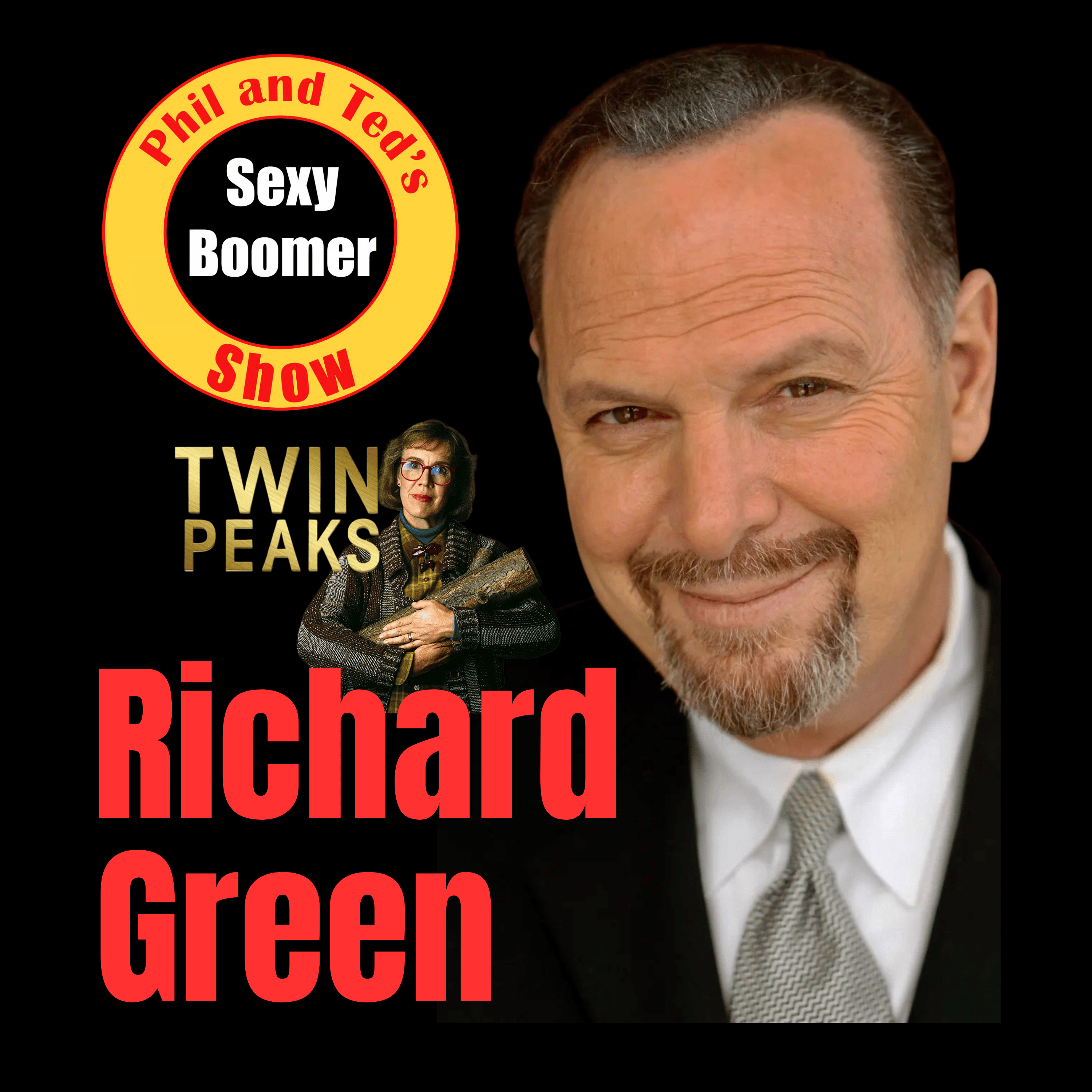


Who was the woman talking to a log on primetime TV — and why can't anyone forget her? Phil and Ted sit down with filmmaker, actor, and singer Richard Green, whose documentary "I Know Catherine, the Log Lady," chronicles the life of Catherine Coulson, Twin Peaks' most unforgettable oddball.
Green was Coulson's friend for decades, and he brings real stories: what it was like on David Lynch's iconic sets, how Coulson built a legacy from one strange, indelible role, and what it takes to survive — and thrive — in independent film. From Twin Peaks trivia to the scrappy realities of crowdfunding a passion project, Green lays out how filmmakers today are ditching the old studio gatekeepers and building direct, obsessive fan communities instead.
Equal parts backstage tour and indie-filmmaking masterclass, this one's for anyone who's ever loved a show enough to wonder about the person behind the weirdest character in it.
Takeaways:
- The podcast features a detailed discussion on the life and career of Catherine Coulson, famously known as the Log Lady from Twin Peaks, highlighting her significant contributions to film and theater.
- Richard Green, the director and producer, shares insights into the challenges of raising funds for the documentary through Kickstarter, emphasizing the strong support from the Twin Peaks fan community.
- The episode explores the intricate relationship between reality and performance, particularly in the context of acting and how life experiences influence artistic expression.
- Listeners are encouraged to reflect on the themes of mortality and living fully, as discussed in the documentary, which poignantly captures the last moments of Catherine's life and her enduring legacy.
Links referenced in this episode:
Companies mentioned in this episode:
- Twin Peaks
- David Lynch
- Mark Frost
- Hill Street Blues
- Eraserhead
- Kickstarter
- Star Trek
- American Film Institute
- Laemmle Theaters
00:00 - Untitled
00:06 - Introduction to Phil and Ted's Show
05:58 - The Legacy of Twin Peaks
09:03 - The Legacy of Twin Peaks: Exploring the Depths
15:10 - The Legacy of Catherine: A Pioneer Behind the Scenes
23:36 - The Journey of a Theatrical Release
28:30 - Marketing the Film: A New Approach
Foreign. Welcome to Phil and Ted's Sexy Boomer Show. I'm Ted Bonnitt and somewhere in another country is my co host, Phil Proctor.
Phil ProctorIt's a little bit like being in mini America here in Nova Scotia because there's everything American is here, just more expensive and yet cheaper. The reason being that the dollar is more powerful than the Canadian dollar.
Ted BonnittWe have a very interesting show today. We have an old friend, actually, Richard Greene. Man, you have done it all here in Hollywood.You are a singer, you are a voiceover man, you are a filmmaker, you are an actor. Have I missed anything?
Richard GreenI'm a good guy.
Ted BonnittYeah, that too, I think.
Richard GreenAnyway, last time I checked anyhow. And I'm a big fan of Phil Proctor's and Jason.
Phil ProctorOh, thanks. You're also a writer and a documentary filmmaker.
Richard GreenYeah.
Ted BonnittI've known you for a quarter of a century, probably because we went out with movies at the same time, independent movies. We were comrades in arms. I was one and done. It was fun.
Richard GreenWe broke some rules and it's a good film.
Ted BonnittThank you. You're still doing it. You're making movies. I know. Catherine the Log Lady. And this is about a character in David Lynch's Twin Peaks TV series.
Richard GreenYes. David lynch and Mark Frost created Twin Peaks, an extraordinary show. I think I remember watching it in that first season when it came out.It was appointment television. You got together with friends and you watched Twin Peaks because it was outrageous and different.
Phil ProctorCultish.
Richard GreenCultish. Nope, never seen anything like it. And yet you got stuck in this story pretty quick.There's a little backstory about Twin Peaks itself that I find interesting. I went and interviewed Mark Frost, co creator of Twin Peaks.And I flew down to Florida and just a week before I went to interview him in Florida, I got a residual check. As an actor, we still get residual checks for TV shows we did 20 and 30 years ago. They're often for 17 and a half cents, they're not worth much.And there is a bar, there used to be a bar called residuals in LA where you could take a $0.01 check in and they'd give you a drink.But I got a residual from Hill Street Blues from my one episode of Hill Street Blues and Mark Frost was the writer of that episode and worked with Steven Bochko. And Hill Street Blues was a very innovative show.I don't know how it's defined by the critics, but for me it took the structure of daytime soap opera where you had multiple characters interacting with interlocking storylines. In the daytime soap opera world, they're all romance and betrayal and kind of boring stories. And it's. It's all about the same thing every day.But I think Bochko took that structure and built it into television show. On a cop show, a procedural show.So Hill Street Blues was the first show that had so many interacting storylines that could last for weeks or even months, and characters coming and going. And I think Mark Frost mastered that with Steven Bocho.Cause that's what he brought, I believe, to the relationship with David lynch, who was very singular, who Eraserhead was made over the course of six years, with David doing everything, including painting the elevator walls.
Ted BonnittI saw that in a ornate, intimate screening room on Fifth Avenue before. Before it came out.
Richard GreenOh, wow.
Ted BonnittNo one knew anything about this. We sat down and we watched this movie.
Richard GreenI got you beat. I got you beat. I met David when I was 20.I had a theater company in San Francisco that had incorporated a theater company that had ended two years before called Circus. It's talked about in our movie. I know Catherine the Log Lady.And everybody that had been in the Circus Theater company all of a sudden was in our theater company. So Jack Nance came up to San Francisco, did a couple of shows with us at this Hyde Street Pier fair thing that we were doing.And then I decided I was 20, it was 1973. A hippie traveling Europe for a year, going and getting lost in the continents for a year was like the goal.And I wanted to do that before my career took off. I was making good money doing improvised verse in the streets. It was a commercial venture called the Renaissance Pleasure Fair. And that.Then they moved it up to San Francisco. So there was one in San Francisco and one here. Then they decided to do a Dickens Fair, which was like 1850s, 1890s Dickensian London.And they built a Dickensian fair. And I ended up getting hired to do improvised stories in verse with an English accent at the Dickens Fair. And I was making like 35 bucks a day.This is 1971. That was a lot of money.
Phil ProctorListen, my first Off Broadway show, I was making $35 a week.
Richard GreenA week? Yeah. I was an actor. That seemed like, natural. When I worked at the Public Theater for a year, I was on the staff of script development.And I was also in Shakespeare in the park and the Public Theater. Every time they had an opening, which could be two or three times a week, they would open different things.They would always have a massive amount of bread and a massive amount of cheese and a bunch of paper bags.And they wanted all of the Actors and writers and musicians who were associated with the Public Theater, come to the opening, eat your fill and then take home bread and cheese because nobody was getting paid. Hardly anything. And that was what was surviving to us.I remember working on a Matlock set and it was the only time I was ever on a set that had no craft services because Andy Griffith was afraid he was going to get fat. He was eating too. So he just canceled craft services. And all the actors were miserable. Everybody was miserable. No craft services.Andy Griffith canceled craft services because he.
Ted BonnittDidn't want to overeat.
Richard GreenYes. I'm not saying anything negative about Andy Griffith. I didn't know the man. That was an awful thing to do. It was a really shitty thing to do.
Ted BonnittSo the movie, which I enjoyed very much by the way, and it's been. You've been playing it because of David Lynch's involvement. Tell us what the movie is about.
Richard GreenYes. Ten years ago, Katherine Coulson died and she was living in Ashland, Oregon. She was the Log lady from Twin Peaks.Yeah, and so much more in David Lynch's life and in my life actually. She was married to Jack Nance, who played Eraserhead.After that theater company broke up in San Francisco, they came down to AFI and the director of that original theater company, David Lindeman from Circus in San Francisco, he became a fellow at AFI and, and brought all his friends around. And David lynch was looking for an actor for Eraserhead.Heard Lindemann knew a lot of people cast Jack Nance and cast Catherine, who never actually shot the role of the nurse. But she became, over the six years that they shot this movie, she became his right hand man, he says it in our film.And she ended up working for administration at the afi. This was like the first years of the American Film Institute. People were there for two years.David was there for six years largely because of Catherine, because she kept him going, kept it alive. Raised money for Eraserhead. Fred Elms cinematographer, award winning cinematographer, also for a number of Lynch's films, not just Eraserhead.He talks about how they had to go away and shoot a couple of Cassavetes movies to make money while they were shooting Eraserhead.So Catherine was just an incredible person, incredible actress, grew up at Disneyland, her father was the head of pr and she dies four days after shooting her sequences for Twin Peaks.And I get a call the day she died from one of my executive producers who's now passed on to Dubain telling me this story that there were they shot in her living room in Ashland, Oregon. And she died a few days later of the same disease as the character. And I just.It hooked me that minute I heard Log lady was dying of cancer and Catherine was dying of cancer, and she shot it and then died of cancer.
Ted BonnittMethod.
Richard GreenMethod. I don't think if she had a choice, I think she would have avoided the cancer. But certainly just an extraordinary tale. And I just.Knowing some of the people, having met David when I was 20 and came down from San Francisco and hung out with Catherine and Jack, it was the opening of the Mayfair musical. I don't know if you remember that place in Santa Monica.
Ted BonnittYeah, sure. It's a shoe store.
Richard GreenNow it's a shoe store. It kills me that it's a shoe store. I was in Mulholland Drive. I played the magician in the Club Silencio sequence.And they shot that at the Tower Theater in downtown la. And it was this magnificent theater which looked just like the Mayfair Music hall. Interestingly enough.That's a little David trick of taking things from life and putting them together. And now the Tower Theater is an Apple store. And they raised the floor. So it has a completely different feel to it. It's sad.Some of these wonderful theaters are just going by the wayside.
Ted BonnittSo the movie is about her life and her passing, ultimately, and the remembrances of her life. And then it's a really interesting story playing in theaters all over the country. All over the country? Yeah.In this day and age, in this environment of the industry, it was tough back when we knew each other, but there were still art houses and people still went to the cinema. We're talking about 2001. 2002. I mean, sure. How do you do it today? How are you hanging in?
Richard GreenIt's a very different world. Right. First of all, how did we raise the money? We did a crowdfunding. We did this on Kickstarter.There's an extraordinary fan base for Twin Peaks and for all of David Lynch's work. We raised the money in 2018. I got the call literally 10 years ago about Catherine and started thinking about the movie then.So I've been on this thing for 10 years. We raised our money. We raised a significant amount through this, through the world of Twin Peaks.It's an interesting fan base, too, in the sense that the only one that's equivalent that I know of is Star Trek has a huge fan base and there are conventions just regularly. But there's a big difference. Star Trek is. It's almost like a police procedural. Every episode has a moral to it. It has A story.It introduces some new characters who come and go, and it's closed end. You finish that episode, it's another one. You can watch them out of order. It doesn't really matter.It's like Law and Order, a very calming kind of thing, because you know what's gonna happen. The Twin Peaks fans are very different. They are largely highly artistic, highly intellectual, and Twin Peaks doesn't answer questions.You watch an episode of the original Twin Peaks, or certainly of Season three, which David just completed a few years ago, there are more questions asked than answered. There are more questions about what a character's real function is and where they're going and who they are.So you tend to find the discussions among Twin Peaks fans are about human life and real stuff that we're all dealing with. A lot of emotion and a lot of speculation about what else is going on, world simulation or special, anything that's to do with the supernatural.So it's a very different fan base, and we were able to tap into that, and we raised our initial budget through that. It took us a couple of years of just doing interviews to tell this whole story.What fascinated me from the beginning was the idea of where does acting start and where does it turn off?I remember years ago seeing an ad that Yul Brenner, the actor from A King and I and so many other movies, he did a television ad for to quit smoking because he had lung cancer. And he got on the camera and he said, I'm going to die. I have lung cancer from smoking. You should quit smoking.I don't want to die, but I'm dying of lung cancer.I was a heavy smoker at the time, still for a long time after, and that knocked the socks off of me because the reality and the acting started to meld.We talked about doing street theater and Dickens fairs and the environmental theater of Renaissance fairs, where people are in character talking to people who aren't in character. Or a customer comes in, cosplay character, and their bad English accent is up against another actor's English accent.That interaction of reality and fantasy, of theater, has always fascinated me. It's why I got heavily into improvisation for a long time. It's why I like jazz music, because it's just.It's alive in the moment, and the tensions and the excitement of that are powerful. I think that's very true for the world of Twin Peaks and the people that are in it, this blurring of reality.Kathryn Coulson was the log lady in Twin Peaks in the pilot episode. It was an afterthought. That character was created on the set 20 years before, on the set of Eraserhead.And David just decided to bring her up for this sequence and just have her turn the lights on and off in the pilot. And her character just took off because people could recognize something about that weird woman who wants everybody to follow the rules.
Phil ProctorShh, shh.
Ted BonnittTurn the protagonist in the race your head. He was carrying around a brown paper bag, wasn't he?
Richard GreenHe had a brown paper bag.
Ted BonnittRemember that?
Richard GreenYes. His lunch bag. I think he left it, what he brought home.
Ted BonnittYeah. And you get. Get into that in the story because she was married to him.
Richard GreenShe was married. He was a good guy. He had some issues. A sweet guy, but a tormented guy. He had a lot of issues.My first documentary I produced was David Lynch Presents I Don't Know Jack the Unsolved Life and Homicide of Eraserhead star Jack Nance. He's a. He's an unsolved homicide, really. Still to this day, he seemed like.
Ted BonnittSuch a sympathetic character in Eraserhead. So when it was suggested in. In Log lady movie that he was abusive towards her, that's what gave, you know, that.
Phil ProctorAnd it.
Richard GreenHe was very wry. He was very funny, very wry. Adored by everyone who worked with him, all the people in our theater company.And the previous one, Circus Theater of Marvels was ours. But he had demons. He had alcoholic demons and other kinds of demons.When you do a film like this, especially someone like Catherine, who really had four distinctive aspects of her life on camera. She was the Log lady, international cult icon. She traveled for 25 years to festivals all over the world carrying the log, keeping this thing alive.It would never have come back without her and Charlotte Stewart and these other events. But she was also behind camera. She pulled focus for Cassavetes movies.She pulled focus on Star Wrath of Khan, first woman who ever did a big major film like that. Very pioneer in the. In that industry.She was on stage for 22 seasons at the Oregon Shakespeare Festival, largest repertory company in the country, and years before that in many other theaters and then also in the community.She was married to a rabbi and was the rabbi's wife, who is the person who goes out and tends the sick and makes the pies and the challah on the Saturday night, Friday nights. And so she was a very diverse person. It took a long time to get the whole story, much less how do you tell it.But the key was that last year, within weeks of David and Mark Frost announcing Twin Peaks is coming back after 25 years. And there's a line in the original series, see you again in 25 years. Showtime decides to pony up, put up a lot of money to make this series.Catherine is one of the first persons to know because David calls her up, they're buddies for within four weeks of hearing that this was coming back. That's when she finds out she has stage four lung cancer. So the structure of the film, is she gonna live long enough to do this?And if she does live long enough, how are they gonna do it? And why must the show go on? That's the big question for me.
Ted BonnittYou're listening to Phil and Ted's Sexy Boomer Show. I'm Ted Bonnitt and my co host, Phil Proctor. Richard Green, our guest, is the producer and director. I know, Katherine the Log Lady.
Phil ProctorI'm enjoying. Richard, your explanation of this extraordinary work that you've done.What impressed me the most as an actor and as an improvisational comedian with the Fireside Theater, was that you managed to tell the story, the individual story of this remarkable person who is an artist and an actress, and yet you cover not only her career, but all the intimacy of her life and her various husbands and her travails. To me, it is one of the most extraordinary and unique documentaries I've ever seen. I encourage people to watch it.You'll be enlightened in so many ways about the power of art, the title of the artist.
Ted BonnittWhere can people see this?
Richard GreenThey can see it at our website, iknow. Catherine.com you wanted to talk about business, and that's the business that we're in,.
Ted BonnittThe movie exhibition business.
Richard GreenWe're in the business of making this available to the people who want to see it and doing it, we think, in a kind of a unique way. Initially we raised this funding through Kickstarter. A lot more was put in. It's about a third of our budget was raised for Kickstarter.
Ted BonnittThese were Twin Peaks fans, mostly Twin.
Richard GreenPeaks fans and fans of other lynch projects. We didn't really advertise much beyond that. We had plans to because there's a lot of theater and stuff. But really, I think it was.We had an extraordinary guy named Peter Dom who runs welcome to Twin Peaks, which is the largest of the websites. And he just was very committed to us succeeding on this.Did some graphics that are still in the project and was instrumental in helping us get it off the ground. But we initially thought we cut it first three years ago as a three part miniseries, just because it was such a big story.It was a big decision also we took six months to decide do we do the feature or do we do the miniseries.And this was coming off of COVID Miniseries were very popular and there were lots of people wanted a lot of long form content because everybody was staying home with COVID And I realized at that point I knew we had more than enough material for a three part. But I figured that if I cut the three part, I can always cut it down to a feature.But to cut a feature and then stick stuff back in later would seem very wrong.So we cut the three part miniseries and our initial intent, we were going to hopefully get a huge sale to Netflix or somebody because we thought we've got David lynch, we've got this incredible, incredible story that's told so well. And not just David lynch, we have Kyle McLaughlin, we have Kimmy Robertson, we have a number of actors which tribute.
Ted BonnittTo Catherine and how much she was loved. She was such an empathetic, lovely person.
Richard GreenVery much.And interestingly enough, the show that she was in in, in Los Angeles when she found out that she was sick was into the woods, which was at the, the Wallace Hansberg Theater. They had brought the show down from Oregon. 48,000 People had seen it in Oregon. So they brought it down to Beverly Hills.While they were doing the show, Catherine found out that she had stage four lung cancer.
Phil ProctorWow.
Richard GreenYeah, it was just a little bit crazy just in terms of her life on that level.
Ted BonnittSo you're deciding whether to do a miniseries or a feature based on market.
Richard GreenForces at that time I just. It was. I wanted to tell the larger story. There's so much more to tell.
Ted BonnittYeah.
Richard GreenAnd like any biography, it takes years to do the research. And we had to do the research on camera. That's how we got the information. So I felt that we had.I felt the story would sustain itself over three parts. We cut it, it was wonderful. It's a wonderful three part miniseries.But when I finished it, which was a little over three years ago, I flew off to Amsterdam. I had somebody I had to meet in Germany. And when I. And while I was in Germany, I got a call from David.He had watched it and all I can tell you is he had me crying for 20 minutes in a. I was in a mall in of front Frankfurt, Germany, hiding so that I wouldn't hear the noises of the mall. And David got the movie on such a deep level.He just, he mentioned things to me that I had forgotten that I had dreamed about doing that are in the film. He was just really supportive. It was an amazing conversation.
Ted BonnittAnd that was one of his last interviews, was it not?
Richard GreenI can't say that because I don't know the answer. That question was asked to me.I was recently in London for A Gathering of Angels, which was a major lynch event, wonderful event put together by Lindsay Bon, who did the Twin Peaks UK festivals. And I was on stage with the producer of season three, Sabrina Sutherland, David's producer for the last 10 or 15 years, just really dedicated to him.She's in the film and she's wonderful in the film. And that question was asked, is this David's last major interview? And I said, I can't answer that.And I turned to Sabrina and she just smiled and wouldn't say a word. So I don't know. It's certainly the best interview I've ever seen with him.When I worked with him in Mulholland Drive, he had seen me doing these improvised verse shows way back at the Mayfair Musical because I had a drinks budget and I don't drink. So Jack Nance and David lynch, they were both living in an apartment up in Beechwood with Catherine at the time.While they were shooting Eraserhead, they would come and watch me do improvised verse at the Mayfair Music hall and drink off of my drinks budget. And if you remember, it's big red curtains of the Mayfair Music hall with a box just like it looks just like Mulholland Drive.Years later I ran into David at Jack Nance's memorial. He asked me, he said, richard, I remember you, but I don't remember how you knew Jack.And I told him this story about being an evil magician at a fair. They paid me an extra salary if I would do my improvised verse and another act.And I had been a magician as a kid and I told him, oh, I got this thing I wanted to build. It's a gallows, it's 12ft tall and I hang myself. And they said, great, here's the money. So I did this act that I would insult the audience.It's how I met my future theater company. John Acorn, Donna Dubain, Cab Covey and Diana Perry.These four people were doing a medicine show, an improvised old fashioned medicine show on the same stage. And that's how we started to work together initially.So I told David about building this gallows and being an evil magician at the end of the memorial. Afterward I had a book on tape. My first feature as a director is called Seven Year Zigzag. If you ever get to see the DVD version.On the back of it is this wonderful blurb written by this wonderful guy named Phil Proctor from the Fire Sign Theater.
Ted BonnittHeard of him?
Richard GreenYes. He's talking about my movie. It was wonderful to have that.
Ted BonnittZig Zag was what you were out with when we met.
Richard GreenThat was what I was out with. Zigzag and I don't know, Jack. The rhyme, the rhyming story told totally a narrated rhyme.
Phil ProctorIt's amazing.
Richard GreenI gave David that. And it's got all swing music. And when you look at the scene in Mulholland Drive, there's swing music.I'm a dark magician and it's in front of a big red curtain. So it's a synthesizing mind.
Ted BonnittIt's still showing, right?
Richard GreenI mean, we had planned only to do a direct to digital release. At first we were going to try and sell the three part miniseries to Netflix, but the market completely changed.Netflix fired all the documentary people.And it became clear to us that we weren't going to get what we deserve, what we felt we deserved for the movie if we sold it to a streamer at that time.
Ted BonnittAnd now, I mean, the market, Sundance market is terrible.
Richard GreenSo we knew that we could make. We made $300,000 in 30 days on Kickstarter.
Ted BonnittWow.
Richard GreenSo that means that if we can get the film out and the film is good, we should be able to tap into that market and see our budget back. At least that was our plan. We'd raised some money. We were going to go build our own website, which we've done. It's beautiful.InKnowCatherine.com is where you can see this. That's all that. We were going to do a big release right then. One of our backers really thought that we should try and qualify for an Academy Award.I'm a humble human being that's out of my imagination. But they were willing to pay for it. So we started thinking about that.And I ended up in conversation with Greg Laemmle of the Laemmle Theaters here in Los Angeles. Great cat.
Ted BonnittBeen a guest on our show.
Richard GreenI saw that. And all of a sudden the idea of doing a theatrical release for the qualifying of the Academy Awards, one week in a theater became a possibility.And then David passed. And all of a sudden we were getting phone calls from all over the country. David lynch passed and we'd like to do a night here.And we talked to a booker, woman by the name of Jessica Rosner who was doing the Beavers. What's it called? 100 Beavers.
Phil ProctorOh, it's very funny.
Richard GreenVery funny.
Ted BonnittI heard it, but I Don't know anything about it.
Richard GreenI don't know that much about it either. She was booking it and they do theatrical performances along with these things.So we contact with her and the next thing we know, she's got us invited to the American cinema text. This is not a fiction festival. We were invited to close the festival. We decided to do a red carpet and ask my.We had Mark Frost, we had Sabrina Sutherland. Kyle McLaughlin came to our red carpet at the Egyptian Theater. It was a fabulous way to start this.And we were also invited up to the Ojai Playhouse, wonderful independent theater. And then all of a sudden, we're being booked here and there, every different city you can imagine into independent theaters for special screenings.One night, two nights, we went up to Ashland, where obviously Catherine had a big presence. We did their festival. They played us every day during the four day festival. And then the theater booked us for three weeks after the festival.There was so much interest up in Ashland.
Ted BonnittWow.
Richard GreenSo it was just. It was accidental. We didn't intend this. And we started. We better make posters, we better do all this stuff.And I found, for me, it was an extraordinary experience that I wouldn't have had had we gone online and sold a million of them right off the bat. And I could wipe out all my debts and pay everybody back that ever did me a favor.It wouldn't have been anywhere near as gratifying as sitting in an audience. The. The Egyptian premiere was 550 people. I've seen it with 700 people. I've seen it with seven people. And the reaction is always the same.It's laughter, it's tears, it's a little more laughter. And then a conversation about what it means to live every moment of your life. Because that's really.This film is set in the world of Twin Peaks to a large extent. And in the world of theater, you'll learn about that.You'll learn about different sexual lives and issues of marriage and infidelity and tragedy and loss. But more than anything else, it's a conversation about what it means to really live.What it means to try and get the very tenderness, the last moments, the last gasp of life. Because that's what Catherine did when she shot her scenes.
Ted BonnittThey were physically propping her up.
Richard GreenYes. Holding her up for these scenes.And it's extraordinary to hear these people tell that story, the people that are in the room shooting it when it happened, and then to see it juxtaposed the actual footage. It's a wonderful story. If you're into movies, if you're into theater. It's a.It's wonderful for you, but you don't have to be into any of that stuff to get this film.
Phil ProctorThe interviews in this documentary, this film are so revealing and heartfelt by everyone. And it speaks again to the amazing power of this extraordinary woman. And because she had very deep friendships.
Richard GreenOh, yeah.
Phil ProctorAnd they are so open and. And honest in what they say. I found that to be extremely moving and revealing.And it's another reason why I think it makes your film stand out from other documentaries.
Ted BonnittThank you.
Phil ProctorAt least for me, it did that.
Richard GreenI was at a party a couple of weeks ago and talking to somebody about the Log lady and this woman, Ellen Bloom, I don't know much about her career, but an interesting woman. She says to me, oh, my friend David Jackson dated the Log Lady. And I said, David Jackson, the bass player? And she says, yeah.And I'm going, wait a minute. I've known this guy for 40 years, right? We opened the Vine Street Bar and Grill together. He was in the band Mood Indigo. He wrote songs with Ringo.He was in the New Christy Min. Amazing guy, David Jackson. You got to know David Jackson.So I called him a couple of days later and he says to me, oh, yeah, Catherine was my first girlfriend. And then he says to me, I've never met anybody more sensuous or more open to ideas than Kathryn Colson. Now this is.She must have been 18 or 19 years old in Anaheim when her father ran the Aunt Jemima Pancake House PR And David Jackson worked there. He went to work for the Aunt Jemima Pancake House in Disneyland. It's, you know, where they made happy face pancakes. And Catherine ran the show.
Phil ProctorWow.
Ted BonnittJust crazy movies. I know Catherine the Log lady. And you can learn all about it@inknowcatherine.com and you can watch the movie from that website as well.
Richard GreenI wanted to tell you about the marketing thing that we're doing.
Ted BonnittYeah, yeah, the marketing of the movie.
Richard GreenYou know, we raised this on Kickstarter. So we had a bunch of backers. 1752 Backers. It's a lot of people.
Ted BonnittWow.
Richard GreenAnd during COVID and just subsequently, it was very hard to keep up these backers updates because. What do you say? I'm still cutting, cutting it down. I'm doing another. Making another cut today. It becomes obtrusive. And I have a quote on my wall.What's done well is done soon enough. That I really, truly believe that as art, we just. You gotta give it the time if you really care. About something, you gotta let it breathe.And I figured that if I did a good movie, I'd be forgiven by the people who thought it wasn't fast enough enough. And if I did a bad movie, even the people who thought it was too fast weren't going to forgive me.So I might as well just make a good movie and in the end of the day, see what happens. But once we decided that we were going to distribute this ourselves, that we weren't going to go through a big streamer, at least initially, right.We wanted to tap into that larger audience that we think is there. We came up with an idea which has now blossomed to something more, and that's this idea of curator codes. What happens now?If you come to our site, if you're one of our backers, if you're one of the 5,000 theaters we'll be reaching out to in the next couple of weeks, or the 150,000 small cancer organizations there are throughout the country, just little organizations. If you're one of our backers or one of those organizations, we're going to offer you a gift, a curator code. You'll be able to see the film for free.If you run a theater, we'll send it to you for free.Watch the film if you believe in it like we believe in it, if you love it like we do, and if you think people need to see this because it really addresses the stuff we don't talk about in life in this country, at least death and how to maximize the potential joy in it, then the positive things for people both sides of the bed. We will give you a curator code. And with this curator code, you can send it to all your friends, family, or followers.They will get $5 off the $20 streaming price. It's an unlimited stream. You can stream it forever with $5 off. That's only $15.But the key is that if somebody uses your curator code, you get $5 sent back to you every time the code is used. So we just. We haven't rolled this out yet. We're just literally putting together all the explainer videos, and this will be coming out.Anybody in our audience who just hears about this, they can go to our website, we ask you to pay for the film. If we don't know you and you're just coming from Nowhere, pay the $20.But if you enjoy the film and you think that people should see it, you can come back. Click on curators, sign up, and you tell us only two things. Tell us why you think people should see this film and who you want to send it to.And I promise you, unless you're really awful, you'll be approved. You'll get a curator code.We will only be making a couple of dollars more, literally $2 more than the person who sends it out after 10 years of making this film. But my attitude is I believe in this film. And it's because of all of these screenings.I went to 30, 40 screenings in different parts of the country doing Q and A's afterward every time we did a showing. And I'm just convinced from the people talking to me, from what they say and how they feel.This film needed to be made and it needs to be seen because we don't have a positive enough attitude about how we spend the last days of our lives, how we help our friends and loved ones spend the last days of our lives. These are Pulitzer Prize winning playwrights and actors and Oscar winning directors.The only time my voice is heard in this film, I laughed twice and we left it in. And the last. The credit, then credit songs are songs that I wrote. The last one with Rebecca Del Rio, I wrote it, but she sings a duet with us.This is the woman from Mulholland Drive that sang Girondo that also passed away within the last six months.
Phil ProctorRichard, I'm so glad you mentioned the music because that's another aspect of this documentary that I found rather unique. The underscoring that accompanies the interviews ties the film together.
Ted BonnittAnd we're out of time.
Richard GreenOh, no.
Ted BonnittYeah. Can you believe it? Unbelievable.
Richard GreenWhat a pleasure to talk to you guys. I enjoy your show.
Ted BonnittRichard Green, director and producer of I know Catherine the Log lady, about the Log lady from Twin Peaks. Wonderful flick. You can check it out@iknow katherine.com. Good luck with it all, Rich. You can find all our shows at SexyBoomerShow.com. I'm Ted Bonnitt.He's Phil Proctor. So long!


