Revolution in America- On the run with the Weather Underground
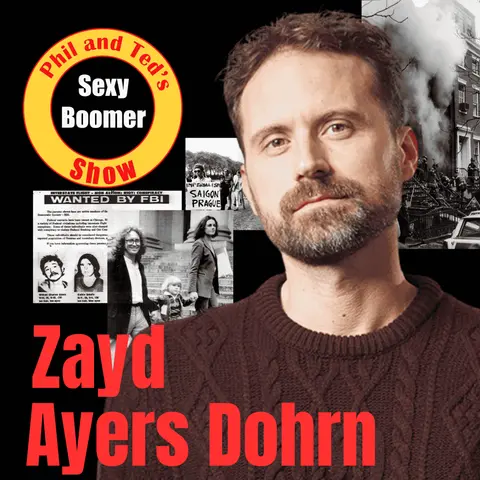


Zayd Ayers Dohrn, son of Weather Underground leaders Bill Ayers and Bernardine Dohrn, grew up as a toddler on the lam, dodging the FBI while his parents traded protest signs for pipe bombs. Then a West Village townhouse blew sky high and took three of their own with it. The kids got the bill: arrests, exile, and scars that never healed. So what happens when people give up on democracy and start building bombs? Zayd knows. He was raised in the fallout.
Takeaways:
- The Weather Underground moved from peaceful protest to planning violent bombings after key killings and frustrations.
- The West Village townhouse explosion was a catastrophic turning point that killed comrades and halted lethal plans.
- Parents used payphones, code words, and secret networks to evade the FBI while underground for years.
- Parents faced a moral dilemma: balancing child safety with commitment to revolutionary struggle and social change.
- The damaging effects on children who experienced instability, separation, and abandonment due to radical actions and arrests.
- FBI overreach, COINTELPRO abuses, and how illegal actions by authorities led to dropped charges against fugitives.
- Historical parallels and warnings that prolonged democratic failure can drive some toward radical and violent methods.
- The Weather Underground's campaign avoided civilian casualties after the explosion, yet its legacy remains morally and politically fraught.
00:00 - Untitled
00:00 - Planning the 1970 "Spring Offensive" — Nationwide Bombing Plot
01:12 - The Weather Underground — Revolutionaries of the 1960s–70s
05:26 - Bernadine Dorn: From Suburban Roots to SDS Leadership
14:18 - Radicalization and the Road to Violence
21:41 - Turning Point: The West 11th Street Townhouse Explosion
29:39 - A Cautionary Tale: My Parents and the Weather Underground
37:44 - Family — Parents' Lives and Political Perspectives
What was happening in early 1970 is they were planning what they called a spring offensive.They were planning to bomb police and government buildings across the country.You know, they had multiple cells spread out in different cities.Chicago, Detroit, New York, San Francisco.And they were getting ready to set off these bombs and make this big statement.And then what happened is one of their friends who was building a bomb in this West Village townhouse, tragically, you know, made a mistake.He seems to have crossed a wire or connected a timer too soon or something like that, and it detonated this big cache of dynamite that they were storing in the basement, and it basically obliterated the townhouse and killed three people.And one of those people was Terry Robbins, who was my father's best friend.And one of them was Diana Otten, who was my father's girlfriend.
Ted BonnittWelcome to Phil and Ted's Sexy Boomer Show.I'm Ted Bonnitt.
Phil ProctorAnd I'm Phil Proctor.
Ted BonnittGood to see you, Phil.
Phil ProctorNice to be seen.I'm actually here.I can't believe it.Ye.I usually can't believe that I'm here.I'm 86 years old and I'm still here.My gosh.
Ted BonnittBut you're not a boomer.
Phil ProctorNo, I'm a bomber.
Ted BonnittYou're a bomber?
Phil ProctorThat's right.
Ted BonnittBut I'm a boomer.
Phil ProctorYou're a boomer.I'm a bomber.
Ted BonnittSpeaking of boomers and bombers.
Phil ProctorYeah.
Ted BonnittWe are going to be talking about the Weather Underground, the revolutionaries of the early 70s, late 60s.60S, I remember.There is a wonderful memoir out by the son of perhaps the two most notorious Weather Underground fugitives.Fugitives.They're still alive.And so is their son, Zaid Ayers Dorn, who is the author of a new memoir, Dangerous, Dirty, Violent, and Young A Fugitive Family in the Revolutionary Underground.It's a unique inside look at the radical politics of the 1970s from the perspective of a child who lived through it as an FBI fugitive.Zade writes about his struggles with coping with his parents, commitment to their cause.
Phil ProctorAnd is it written in.In.In crayon?Oh, no.He's grown up now.
Ted BonnittHe's grown up now.Yeah.No.He's a successful playwright and writer and a professor at Northwestern.Zaid Ayers Dorn, welcome to the show.
Zayd Ayers DohrnThanks, guys.Thanks for having me.
Ted BonnittHey, thanks for joining us.This is really enjoyed your book.Fascinating story.
Phil ProctorReally is a blast from the past, if you'll excuse pun intended.
Ted BonnittWe're gonna talk about the whole movement.The Students for Democratic Society, sds, the Weathermen, then the Weather Underground, the Black Liberation army, all of these groups that became increasingly radicalized primarily because of the Vietnam War.And it got pretty bad for a while.Zaid, you saw it through the eyes of a child.You open up the book talking about how your first memory is a pre dawn getaway down Broadway in New York, across the GW Bridge in I80 heading west.But yet you wrote that this is the closest you ever came to feeling totally safe.
Phil ProctorHow old were you, Zade?
Zayd Ayers DohrnI was probably three or four.In those early memories of being underground.
Phil ProctorThat's cool that you can remember that.Wow.Well, I guess it's kind of traumatic, isn't it?So with stick in your hand.
Zayd Ayers DohrnYeah, exactly.I actually, I was wondering about that because when I was writing the book, I had these shards of memory and sensory impressions and stuff, and I actually looked up, you know, how early can you remember things?And they said exactly what you just said, which is like, for traumatic memories, they can imprint pretty early at 2 or 3.So, yeah, some of my memories from 4 years old when, you know, running from the FBI are still pretty vivid for me.
Phil ProctorWow.
Ted BonnittWell, Even at age 4 and 5, you already knew how to spot an undercover cop.And FBI's right.I mean, your parents taught you how to be on the lookout at that age, which is amazing.I mean, what, what did they tell you?
Zayd Ayers DohrnWell, I mean, one of the funny things about my childhood is that my parents never really lied to me about any of this stuff.I mean, when I was three years old, I knew that the FBI was chasing us.I knew that my mother was an outlaw, my father was an outlaw.I knew that we used fake names when we were outside the family.I don't even think I knew what the FBI was at the time, but I did have a sense that we were being chased.And, you know, they tried to explain it to me using childhood stories that I knew.Like we had seen the Disney animated Robin Hood with the animated Fox.And they told me that, you know, we were like Robin Hood and his merry men.We were outlaws who stole from the rich to give to the poor.And we were, you know, like Luke Skywalker and Princess Leia.We were part of a rebel alliance fighting an evil empire.So that's how they explained it to me when I was very young.
Phil ProctorThat's fascinating.
Ted BonnittYou were born in 1977, which explains the Star wars reference.That's when it came out.
Zayd Ayers DohrnOne of the first movies I ever saw at a drive in, Second Run Movie theater.
Ted BonnittOn the run.
Zayd Ayers DohrnYeah, on the run.
Bernadine DohrnWow.
Ted BonnittHow long were you on the run for your first few years of life.
Zayd Ayers DohrnI mean, my parents were on the run for about 11 years.I was for the last four, four and a half years of that.And, you know, we turned ourselves in in 1980, and then.And then my mother went to jail when I was 6 or 7.So I have a lot of memories at that time when my mom was locked up.But, yeah, by the time I was a teenager, we had a relatively normal life.But it was those, those early years that were the, the underground years for me.
Ted BonnittLet's talk a little bit about your dad and your mom.Your dad, Bill Ayers, came from privilege into the Chicago area.He joined the peace movement at the University of Michigan.He was then drafted into the Vietnam War, but he burned his draft card.And he increasingly became radicalized as the Vietnam War went on.He regarded it as genocide being carried out by his own country.
Phil ProctorThat's right, yeah.
Ted BonnittYour mother, Bernadine Dorn, was one of the heads of the SDS when it was the largest student protest group in the country.She organized voter drives and then peace marches and then sit ins, and eventually she became radicalized.She had an interesting upbringing.You talk about how headstrong she is.What do you think made your mom into a ten most wanted FBI criminal?
Zayd Ayers DohrnYeah, well, as you say, it's quite an astonishing journey because she grew up, you know, a middle class white kid in suburban Wisconsin in Whitefish Bay, just outside of Milwaukee.Her parents were Republicans.You know, her dad voted for Joe McCarthy and he was a second generation Jewish immigrant who was very patriotic, very conservative.So she grew up, you know, in the 1950s, believing in the American dream and really being raised to try to, you know, better her family's future.And in fact, she was the first person in her family ever to go to college.So I spent a lot of time in the book talking about, thinking about that journey.You know, how did a kid who grew up in that world in the 1950s go to being somebody who, you know, FBI Director J. Edgar Hoover called the most dangerous woman in America?I think part of the answer is that she left for college in 1960.So you can imagine the way that the world, I mean, you guys know the way the world was changing at that moment.And the way a kid from a small town in Wisconsin showing up at the University of Chicago in 1960 was going to see things and experience things that her parents really hadn't prepared her for.And in my mom's case, what that meant was really being changed by the civil Rights movement.She eventually went to the University of Chicago Law School.And she was basically like any liberal, idealistic law student.She wanted to make a difference.She wanted to make the world a better place.She wanted to be a lawyer.And then when Dr. Reverend Martin Luther King, Jr.Came to town in 1965, 1966, to lead the rent strike in Chicago, she volunteered to help out with this fight against, you know, segregation in the city.And so she marched with Dr. King.She was there for some of the famous demonstrations through Gage park in Chicago, where Dr. King was hit with a brick that one of the white counter demonstrators threw.So she know, she saw the kind of early moments of that civil rights struggle.She was very committed to non violence.Then, of course, Dr. King was killed, was murdered by a white supremacist vigilante.And I think for my mom and a lot of people, that really changed her whole thinking about what she had to do, how this country could be changed or should be changed.As you said, she joined sds, Students for Democratic Society.She was soon elected one of the national leaders of that organization.And then, I guess the next, I would say, turning point for her was that she made an alliance as leader of SDS with the Illinois Black Panthers, and in particular with the.The leader of the Illinois Black Panthers, Chairman Fred Hampton, who was a young, charismatic, idealistic black activist.They became friends, allies, they worked together.And then Fred was murdered by the Chicago police in 1969.
Ted BonnittThe cops were really out to exterminate this trouble.I didn't know that an informant who was embedded with Fred Hampton had spiked drinks that night.So he was out of it when he was assassinated.He couldn't get up to defend himself, but to just step back a minute, because your mother, as you write, she had an interesting background because her father had changed the family name, which was very common back then.A lot of Jews who immigrated to the U.S. changed the names because they didn't want to bring that to their kids.
Phil ProctorYeah, what was her original name?
Zayd Ayers DohrnYeah, my grandfather's last name was Ornstein Ornstein.And, yeah, he was a Jewish second generation immigrant.His father, Jacob Ornstein, was a plumber and a pipe fitter.So they'd had that kind of American story, that American immigrant story, you know.And my grandpa wanted to assimilate.He wanted to become more American, 110% American, change their name to Dorn.
Ted BonnittAnd then she also sees that when she gets into law school, she's what, one of six women admitted, and she's looked down upon as a woman, and then was this sort of a racial thing that she encountered, that in her yearbook, I guess, her high school yearbook, she was described as having a touch of the exotic.Yeah.
Zayd Ayers DohrnOne of the weird things about her story is that despite her father's attempt to assimilate and to make them as American as possible and to hide their Jewish identity, she kept on being singled out as Jewish throughout her early life.So in her high school yearbook, yeah, she was described as having a touch of the exotic.She was kind of darker skinned, darker haired than most of her suburban friends in Whitefish Bay, Wisconsin.And then she.Actually.Her first choice of college was Miami of Ohio.And she applied to, you know, she.She tried to rush a sorority at Miami of Ohio to just to fit in and be part of the college scene.And she was turned down by every sorority on campus.And they told her it was because she was Jewish.So she had kind of experienced her own version of discrimination early on, which I. I speculate in the book might have, you know, contributed to her affinity with the black freedom struggle.
Bernadine DohrnYeah.
Ted BonnittAnd sparked some anger as well.
Zayd Ayers DohrnExactly.
Ted BonnittAnother weird moment that changed her life the time she met Muhammad Ali.
Zayd Ayers DohrnYeah.It's pretty amazing to do this research and realize the people your mother loved doubles with.I mean, the fact that she knew Dr. King, that she knew Fred Hampton, and that she actually ran into Muhammad Ali, that was a story I didn't know before I started interviewing her.But basically the story is that she was this young, idealistic legal volunteer working for Dr. King's rent strike in Chicago.And one day there was a family, a black family, being evicted from their home for failure to pay rent.Evicted by a slumlord.So there were sheriff's deputies, you know, carrying out their furniture and throwing it into a big pile on the lawn.And my mom showed up as a legal volunteer trying to stop this eviction, but she couldn't stop it because the sheriffs had a.A legal warrant to evict this family.And the way she tells it, suddenly she noticed that there was this fairly large man standing next to her, that he had this kind of imposing presence.A crowd had gathered, but this man turned to her and he said, do you mind holding my sports coat?And he handed her his coat, and it was Muhammad Ali.And he was, at the time, you know, the most famous face in the world.He was like LeBron James now or something.And Muhammad Ali strode forward, picked up a table, and carried it back into the apartment.
Bernadine DohrnWow.
Zayd Ayers DohrnAnd to hear my mom tell it, that just started this chain reaction where everybody in the crowd watching their hero Muhammad Ali, defy the police.Suddenly, everybody in the crowd picked up a piece of furniture and carried it back into the house.Yeah.It's pretty amazing.So for my mom, that was just this moment of realizing the power of that kind of direct action and alliance.
Ted BonnittAnd what it could do.Leadership.Leadership.
Zayd Ayers DohrnExactly.
Ted BonnittAnd yet she still was confronted by resistance.Your mother was a looker, evidently.And mom kept writing about her miniskirts.She was called sex queen and street fighter.
Phil ProctorIt sounds like one battle after another.
Ted BonnittRight, right.Yeah.
Zayd Ayers DohrnIt was inspired by my family story in a lot of ways.
Phil ProctorYeah.
Ted BonnittOh, wow.Yeah.
Zayd Ayers DohrnBut I think it's.That's right.One of the things that was interesting about my mom's journey is, I mean, I mentioned she was the first person in her family to go to college.You mentioned she was one of only six women in her law school class.It was a sexist time.And by the time she was elected one of the leaders of sds, she was one of the only prominent women in New left leadership.
Phil ProctorRight.
Zayd Ayers DohrnIt was a very uncommon thing to have that sort of role for a young woman.And as you said, she was often belittled for her looks, for the fact that people over sexualized her.They commented on the size of her skirts and speculated about her relationship with the Black Panthers and a kind of, you know, insinuation of sexual relationships.So there she had to face all that as a.As a woman who was leading this.
Ted BonnittThis radical group in the 60s.
Phil ProctorThe sexy 60s.
Ted BonnittThe sexy 60s, yeah.When sexual liberation was huge.
Zayd Ayers DohrnSexual revolution, my mom went to college was the year that the birth control pill finally hit stores.So it was very much the beginning of the sexual revolution and a whole reimagining of women's role in society.
Ted BonnittShe became a de facto leader of the SDS at this point because she was so outspoken and she was so dynamic.One could understand the radical movement.The 68 Democratic convention where you had Mayor Daley attacking kids.
Phil ProctorYeah.The violence really came from the govern.The government.
Ted BonnittThe government.At what point did your mother become radicalized?What happened?
Zayd Ayers DohrnYeah, well, I think a couple things happened.I would say the first thing was that she had a real sense as one of the leaders of sds, that young white activists were not doing enough, especially given the way the government was targeting the Black Panthers and other black activists around the country.And so one of their first actions was what they called the days of rage, when she split SDS and basically decided, we need this more radical, confrontational group of activists willing to go out onto the streets of Chicago and fight with the police.So that was the danger rage riots in 69.But then I would say that the second big turning point for her that put her on a road to violent confrontation with the government was the killing of Fred Hampton.I mean, I mentioned it earlier, but it was just such a central thing for her when she realized that this government was not only willing to.To oppress activist groups, to spy on Martin Luther King Jr. All these things, to break their own laws in order to go after black activist groups, but were willing literally to murder somebody in his bed while he slept next to his pregnant girlfriend.I think for her, that was a moment of thinking, we have to do more.We have to fight back in some more dramatic way.And the government isn't going to let us change the world by peaceful means, so we're going to have to use other methods.
Ted BonnittThe black liberation movement was plagued and set up so much and targeted by the establishment.Governor Reagan ran some really nefarious programs where even SINQ of the SLA was basically.He was an informant.That was a bit of a setup to discredit the black power movement.It was deadly and it was violent.And I can see where that anger would turn to violence in return.
Phil ProctorOf course, for me, it turned to comedy.The Fireside Theater was radicalized.And a lot of the comedy that we wrote that was socially unacceptable and provocative came out of our resistance to the.To the Vietnamese war, to the oppressive government behavior at Flint.
Ted BonnittYour mom praised the Manson murders.
Phil ProctorYeah.What's that all about?
Zayd Ayers DohrnYeah, it's a good question.I mean, I spend a whole chapter on what they called the Flint War Council in the book.And, you know, the Flint War Council was a moment.It was after Fred Hampton's murder, and it was a moment when a bunch of Weathermen activists gathered in Flint, Michigan to try to decide what to do next, you know, to.And.And by that point, I would say even my mom would admit that they were very much going over the deep end, that their anger about the war, their anger about the government assault on black leaders had reached this fever pitch where they were just psyching each other up to go further, to do more.And in the.In the midst of that, during one of her speeches when she was rallying the troops and talking about how they had to.They had to get more radical, they had to get more confrontational, she brought up the Manson murders as a way of saying, you know, they did this crazy thing.They, they.They killed the pigs.Dig it?And, you know, we should do the same.Now, you know, she claimed.I've talked to her about that a lot.She's taken a lot of, you know, a lot of criticism, rightly so, for that comment.It was one comment in a much larger speech.But she would say that she was trying to make a point about the kind of overheated violence in the American media, the fact that America was obsessed with violence and that they were.That the American government and media claimed that they were, you know, peaceful, but in fact, they were all about glorifying violence when it came to the Vietnam War, when it came to the Manson murders.So, yeah, I mean, I've confronted her about it.We talked about it.I think it was an unacceptable thing to say, but it came in the context of just trying to show how.How far they were all willing to go by that point.
Ted BonnittAnd then the violent acts started, the bombings.The first one was the statue.
Zayd Ayers DohrnYeah, I think they had slowly kind of escalated from, I guess what we might call firebombs or Molotov cocktails to dynamite bombs.There were a couple moments after Fred Hampton's murder, for example, the weatherman that night put a bunch of cups filled with gunpowder under police cars in a police parking lot in Chicago.You know, unmanned police cars, and they blew them up in the middle of the night to show their anger at the police murder of Fred Hampton.That was probably the first, but that was just, you know, that was kind of like small scale sabotage.Then they escalated to actually figuring out how to make dynamite bombs.And, yeah, one of the first targets of that was the Haymarket police statue, which was this big bronze statue commemorating the Chicago police and kind of a memorial to the men killed in the Haymarket bombing a century earlier.And, yeah, the weathermen decided to blow that statue up again as a sort of finger in the eye of the Chicago police.
Ted BonnittYou know, I saw a CBS report from that era, and they did a piece related to the bombing saying anyone can go up and buy dynamite in America, which was kind of shocking to hear.
Zayd Ayers DohrnBut this was an age, of course, of, like, widespread agriculture and, you know, people use dynamite for, you know, plowing fields and rooting tree stumps and things like that.So it was fairly.Yeah, it was fairly.
Ted BonnittSo the bombing started, and about a year after the statue blew up, I want to play a statement your mother made about a year after the explosion of the statue, and then right after that, her sister's reaction to it.
Bernadine DohrnSisters and brothers.A year ago, we blew away the Haymarket pig statue at the start of the Youth riot in Chicago.The head of the Police Sergeants association called emotionally for all out war between the pigs and us.We accept it.Last night we destroyed the pig again.This time it begins a fall offensive of youth resistance that will spread from Santa Barbara to Boston back to Kenton, Kansas.Now we are everywhere.And next week families and tribes will attack the enemy around the country.We are not just attacking targets, we are bringing a pitiful, helpless giant to its knees.We invite Key and Nixon and Agnew to travel in this country.Come to the high schools and campuses, but guard your planes, guard your colleges, guard your banks, guard your children, guard your doors.
ReporterCan you verify that the voice is that of Bernadine Dorn?
Jennifer DohrnYes, I'm her sister and I'll verify that it's her voice.
Ted BonnittJennifer, are you going to turn this information over to the police?
Jennifer DohrnWell, I assume they already have it since we've used our phones here.I mean, it's open knowledge.This is, this is their statement.
Ted BonnittHow do you feel about what your sister is advocating?
Jennifer DohrnI think it's right on.I think she's far out.And all weathermen are far out.
Zayd Ayers DohrnCould you explain that?
Bernadine DohrnThere are brothers and sisters, they're underground.
Jennifer DohrnThey're forced to be outlaws by the way the society is running.We think they're great.
Ted BonnittFar out, man.
Phil ProctorWow.
Ted BonnittOur guest is Zaid Ayers Dorn, who wrote his memoir Dangerous, Dirty, Violent and Young A Fugitive Family in the Revolutionary Underground.Fascinating story, Zaid, really well told.It's a great read.So the bombing started and talking to your mother, even now there's a code of silence.But they were able to sneak into the US Capitol, the Pentagon.But before even that happened, something terrible happened that really changed everything when a townhouse on West 11th street in New York's Greenwich Village blew up.Initially they thought it was like a gas explosion.Three people died.
Phil ProctorAnd it was next to Dustin Hoffman's place.
Ted BonnittYeah, which is why so well known.That was a turning point, wasn't it, Zaid?
Zayd Ayers DohrnIt really was.For my parents, for the weathermen, that was a major turning point.I mean, I think what was happening in early 1970 is they were planning what they called a, a spring offensive.They were planning to bomb police and government buildings across the country.You know, they had multiple cells spread out in different cities.Chicago, Detroit, New York, San Francisco.And they were getting ready to set off these bombs and make this big statement.And then what happened is one of their friends who was building a bomb in this West Village townhouse, tragically, you know, made a Mistake.He seems to have crossed a wire or connected a timer too soon or something like that.And it detonated this big cache of dynamite they were storing in the basement.And it basically obliterated the townhouse and killed three people.And one of those people was Terry Robbins, who was my father's best friend.And one of them was Diana Otten, who was my father's girlfriend.So for my father in particular, it was just a terrible personal tragedy.And for all of them, it was just, you know, the loss of their friends and the loss of their sort of way forward was just this cataclysmic political turning point.
Phil ProctorYou know, this was all before the Internet.How.What kind of a network did they establish to coordinate the way they had payphones?
Zayd Ayers DohrnYeah, a lot of codes and payphones.And this is one of the things I learned early on as a four year old was, you know, we made all our calls from payphones.We carried rolls of dimes in our pockets so that we could only, you know, we never used landlines and we.There were ways of speaking in code.There were code words to identify yourself.There were specified contact times when people would know to be at a payphone so that they could get a call from somewhere else in the country.So, yeah, it was very analog compared to our current society, but very well planned and interesting.
Phil ProctorThat's my favorite scene, actually, in one battle after another, where the guy requires a password to prove.
Zayd Ayers DohrnVery familiar to me.I remember things look very much like.
Phil ProctorI'll bet you do.
Ted BonnittBut now let's not lose sight of what they were doing in the townhouse.They were building a bomb with intentional shrapnel for maximum lethality.And they were gonna take that to a military base in New Jersey where there was an officer's bas dance, this bomb with roofing nails for shrapnel.
Phil ProctorWell, it's terrible.
Ted BonnittThis is before your parents got together.Your father was aware of this.How do you reconcile with the fact that your dad apparently was willing to kill innocent people like that?
Zayd Ayers DohrnWell, so I would say, first of all, he wasn't exactly aware of what was happening in New York.My dad was in the Midwest running the Detroit group of the Weathermen.But it's true his closest friends were involved in this.And I guess I would say a couple things about it.One thing is that it's certainly true that in 1970 they were at their most.They had, I think, lost their moral compass in their rage against the war, their rage against what was happening to the black movement.They had decided they had A slogan at the time that was Bring the War Home.And what Bring the War Home meant for them was we have to remind.Americans are complacent, they're asleep.They're not paying attention to this terrible violence that's being carried out by their own government.And what we have to do is bring an echo of that violence home onto the streets of America because of.
Ted BonnittThe My Lai massacre and how brutal that.
Zayd Ayers DohrnExactly.The Milan massacre and apalm and villages being burned and men, women and children being killed.And so I think, you know, that that slogan, Bring the War Home started as a sort of a piece of rhetoric, right?It wasn't literal.It was like.It was a way of saying, we have to do more.We have to bring that war onto the streets of America.
Phil ProctorThe Fireside Theater, we did a whole musical number.We're Bringing the war back home where exactly it was a thing before.I don't know if we.
Zayd Ayers DohrnAnd in fact, what we now call the Days of rage riots in 1969 was actually called at the time to Bring the War Home action.So what they meant at first was not bombings and certainly not lethal bombings.They meant bring violence onto the streets of America, confront the police, fight the cops, you know.But what's true is that some members of the organization, including Terry Robbins, my dad's best friend, had come to believe in that slogan, quite literally.They.They had decided that it was their responsibility to bring the war home.And if that meant that if America was bombing peaceful villages in Vietnam, that meant bombing government buildings here in.In America.The American army was killing people in Vietnam.That meant killing American soldiers here, here at home.It had become quite a.Quite a, you know, a violent idea.
Ted BonnittWe were insulated at that point in the 60s, we were still very high on empire.Post World War II.We had no concerns here on our shore, any kind of danger like we do now.
Phil ProctorThat's right.
Ted BonnittIt was almost an abstraction that they wanted to bring home.Our guest today is Zade Ayers Dorn, author of the new memoir Dangerous, Dirty, Violent and Young.A Fugitive Family in the Revolutionary Underground.
Phil ProctorIt's extremely timely, too, to be talking to you, Zade.Because of the unrest in our country,.
Ted BonnittZay, do you think there is potential for violent resistance to what's happening in this country?Or do you think it's something in the past?
Zayd Ayers DohrnNo, it's an important question, I have to say.I mean, the parallels to our time are striking.And as I was doing the research, I couldn't help but notice all, you know, the parallels involving police violence against black people.The parallels involving an authoritarian president who had seemed to be losing his own bearings and pursuing war overseas that the American people had turned against.So you could see those parallels.The other thing I keep thinking now, in this moment in 2026, of course, my mother and the Weathermen are now known as this kind of radical, violent faction.But one thing that's important to notice is that my mom and many people like her had spent almost a decade protesting peacefully throughout the 1960s.That's when she was part of SDS.She was in demonstrations.She was arrested in sit ins.My father was arrested, the first SDS sit in at the Selective Service office in Ann Arbor.So, you know, they were peaceful activists for a decade.And I think one thing that reminds me of our current moment is that here we are a decade into the Trump era, and many young people, like my daughters, for example, have never known much else.They've spent their entire adolescents and young adult lives in the shadow of this encroaching authoritarianism, this racist crackdown, all these kind of, of same things.And I do think that we're in this hinge moment right now, because what happened in 1970 is that after a decade of protesting peacefully and doing everything the right way, a bunch of young activists realized that things were not only not improving, they were getting worse.The war was escalating, the crackdown on black freedom groups was getting worse.And that turn to violence came after, you know, at the end of a decade of frustration with the democratic process.So I do worry that we're in a moment right now where people are contemplating other, other methods of resistance out of necessity.I also think we're seeing, you know, direct action, not necessarily violence, but I think the resistance in Minneapolis to the ICE raids was instructive, you know, to have ordinary citizens standing up, putting their lives on the line, putting their, you know, cars in between their neighbors and these federal troops who were, who were arresting people and assaulting people.You do see kind of echoes of Kent State, echoes of the days of rage, echoes of the kind of people who stood up against National Guard troops in the streets.So, yeah, I think the historical echoes are clear.
Ted BonnittWell, as a cautionary tale, let's talk go back to your mother and father a little bit.Bill Ayers and Bernadine Doran.After the townhouse blew up, your mother realized this wasn't the answer and she didn't want to hurt people.So they went on a campaign of setting explosions in key places like.Well, she won't admit to you or anyone, whether or not she was involved in the U.S. capitol bombing or the Pentagon bombing.These key buildings were targeted brilliantly, I would say, by these kids who went in, placed bombs, got out, but then called ahead and got everybody out of there so they could make the demonstration without hurting people.Your mother ran into some trouble with that.She was renounced by youngins coming up in the organization as somebody who had betrayed the revolution.And your mother was pressured deeply by these younger members to renounce her decision to not go for deadly force.That was a major turning point for your mother, which to this day she regrets because she did denounce the Weather Underground at that point.
Zayd Ayers DohrnYeah, yeah, yeah.To me, it is a cautionary tale about the tendency in leftist and progressive organizations towards factionalism and the tendency to have infighting.And people kind of constantly looking for some sort of purity test where only the most radical or only the most committed members are allowed.And there's not space for dissent or space for other ways of thinking.You know, as you said, my mother was one of the, along with her boyfriend at the time, Jeff Jones, was one of the key figures within the group who said, after the townhouse explosion, no, we have to step away from deadly violence.We can continue to make these statements, we can continue to even and blow up buildings, but we have to do everything in our power to avoid hurting human beings.And so they were very careful.And throughout the seven year bombing campaign by the Weather Underground, they never hurt or killed anybody except their own friends in the townhouse.So I think that's a.It's an admirable part of their history.But as you said, eventually the organization fell apart.Right before I was born, when my mother was pregnant with me, they started denouncing each other.They started insisting on these kind of criticism, self criticism sessions and purity tests.And eventually she was expelled from the organization she had founded and led by a group of younger militant comrades.
Ted BonnittAnd the Vietnam War was over.So that kind of.
Zayd Ayers DohrnYeah, I think once the Vietnam war ended in 1975, a lot of the kind of.I mean, one thing that's fascinating about the Weather Underground is that they had been supported in many ways by this larger counterculture.You know, I don't think my parents could have stayed on the run for 11 years without the fact that many people who were above ground were sympathetic to their choices and were willing to hide them or give money to the organization or lend them cars, things like that.So once the Vietnam War ended and that kind of moment of counterculture solidarity started to fall apart.I think the organization's days were numbered.
Ted BonnittYour mother and your father turned themselves in and she got a slap on the wrist essentially because the overreach of the FBI, it was so illegal.Mark felt Deep Throat.
Zayd Ayers DohrnAnd yeah, some of your listeners might remember the cointelpro scandal, which was basically the FBI was outed for having broken the law countless times in pursuit of Weather Underground fugitives and also in trying to break up the Black Panthers and murderers, Martin Luther King Jr. S organization.So, you know, many of the charges against my mother just had to be dropped due to FBI misconduct.I mean, so much of the evidence they had against her had been obtained illegally.
Ted BonnittI wonder if Patel's FBI would.Would ever cop to that.
Zayd Ayers DohrnProbably what all the.The norms and rules and everything that Patel's FBI is now breaking, these are norms that were put in place after the cointelpro scandal to try to rein in the FBI and prevent them from these unconstitutional actions.
Ted BonnittBut the law ended up catching up to your mother anyway through another terrible event, which was the Brinks robbery in Nanuet, New York, which incidentally I lived two miles away from that when it happened.I remember the day.I remember the weather of that day.Not the Weather Underground, but I just remember the weather.And it was an awful, horrible day.The Nyack police officer, who happened to be the first black officer in the Nyack police force was one of the murdered cops.There was this huge dedication and loyalty to the Black Liberation Army.They needed white folks to be beards because black people running from a crime scene is not exactly a deflection.So they would engage white radicals to help them pull off the crime through getaways and stuff like that.And the Weather Underground people somehow felt obligated to help these people blindly at great risk to themselves.And this is what happened to Kathy Bodine and her husband David Gilbert.They were enlisted to help drive a U Haul truck.They had no idea what they were waiting to do.And these Black Liberation army guys were robbing a bank.The leader of their organization wouldn't have anything to do with it because it was such a sloppy plan.According to your book, they fled the scene and jumped into the back of the U Haul and told them to drive.Unfortunately, somebody saw them with guns jump out of this car and get into the back of the U Haul.They were arrested and they were going away forever.Their son, which is what I really with the last minutes we have want to talk about, which is what the effect on the kids.I think that's the thread in your Story that's so interesting to me is that they sacrificed their child by breaking their own rules, by never doing a crime together, but they were together in this one.And then this young kid, Chase, is it Chesa?Yeah.Lost his parents, and he really went through it, and your parents took him in, and you ended up having.You had another brother, Malik, and then Chesa came in to live with you because he had nowhere to go.And it was kind of hellacious.You guys are good friends now, but, man, the kids.You can't help when you're reading the book to say, I get their devotion to the cause, but ultimately it was selfish.
Phil ProctorHow do you feel?
Ted BonnittDo you feel that way?
Zayd Ayers DohrnI mean, I wouldn't.I wouldn't call it selfish.What I would say is that it's.You're.You're right, of course, that there were terrible costs to the children, and especially people like Chesa and other people like Harriet Clarke, whose mother was part of the Brinks robbery.You know, these were kids who were left at home.They were infants at the time, really, or toddlers, I suppose.Jason was 14 months old.His parents left him with a babysitter and went out together to rob a bank to.As part of this kind of revolutionary action that they were part of.And of course, things went terribly wrong.Police officer and security guards were killed.It was, you know, just a moral and tactical and political catastrophe.From my point of view, as to the question of them being selfish, my feeling is.And part of what was fascinating about writing the book and researching the book is that I came to understand by researching their stories, their arcs of radicalization, their own writing, that for them, there was really no contradiction between fighting for their own children and fighting for a better future for this country.In other words, they had really.They believed deeply that the country had to change and that they didn't want to bring their children up in a country steeped in racism and white supremacy and violence.And so for them, they faced this terrible contradiction once they became parents or this terrible dilemma.And the dilemma was, we want to take care of our children.We want to be good parents.We want our families to be safe.But on the other hand, we can't bring ourselves to just.Just give up on the struggle and say, well, we can use our white privilege to keep our own families safe, and we'll just let our friends and comrades and black people and Vietnamese people, their children can fend for themselves.So I think for our parents, it became this really complicated moral question of, how do you protect your children while Also fighting for a better world.
Ted BonnittYeah, that's a good point.Both your parents are alive.I know your mother is suffering from Alzheimer's.Your dad is a retired professor now.He still gets around.He attended Obama's presidential library opening event.He's still kind of plugged in.What's his take on what's going on in this country right now?
Zayd Ayers DohrnOh, you know, I think he's like all of us, horrified by what we see from the administration and the war in Iran and the bombing of Gaza and, you know, the threats to democracy here at home, the Black Lives Matter movement and police violence against black people, which continues.All those things, I think are of terrible concern to him.I would also say that he's an optimist and has always been an optimist to the point of silliness.I mean, it's a joke in our family about how my dad always thinks better times are coming.But I think for him and for my mother, too, this is a moment filled with kind of worry and fear and sadness, but also a lot of hope in the next generation.Hope in an awakening of this country and sort of a new era of protest, a new era of radical imagination and new politicians and leaders who seem to be imagining a different way forward for the country.So I would say he's, you know, cautiously optimistic and also determined to do what he can to help move things forward.
Ted BonnittYou say in the book that your parents saw the 2020 protests as a second peak.I doubt he supported the insurrection itself.But what was it that he took away from it, if anything?In admiration?
Zayd Ayers DohrnI don't think admiration.I mean, I confront him in the book about the insurrection, the January 6th attack on the Capitol, because you can't avoid the parallels.The Weathermen bombed the Capitol, and then decades later, these people stormed the Capitol.And I wanted to understand how he, he thought of that parallel and what he said might be unsurprising to people, which is basically that my father is somebody who believes deeply that the ends are more important than the means and that.So he's not against insurrection as a.As an idea.He talked to me about how he supported insurrections.You know, in slave uprisings.John Brown led an insurrection.He talked about the Cuban Revolution as an insurrection.Insurrections that he supported.And he said about January 6, well, that's a fascist, white supremacist, authoritarian insurrection.It's not a revolutionary, people powered uprising.And I think it is important to note the distinction that the people in the Capitol on January 6th were not some kind of like anti government protesters.In fact, they were responding to the call of the sitting US President.They were very much supporting an authoritarian takeover, not opposing one.
Ted BonnittAnd now you're raising kids, and they always say generations are one step apart.How much of your parents do you see in your kids?
Zayd Ayers DohrnI see a lot of my parents, and my kids are certainly my mother.I have two daughters and I see my mother in both of them.They're, you know, they're very different from her in many ways.I mean, they're both in college now.My eldest is studying to be an artist in art school.My youngest is studying to be a journalist.So they're both, they're not, they're not full time activists, but they're both very concerned with what's happening in the world.They're both very determined to do their part in kind of imagining better things.And they're both very willful like she is, and very brilliant like she is.
Ted BonnittSo, yeah, wonderful.Well, Zade, we didn't get a chance to talk about the Timothy Leary breakout.That's a hilarious.Read the book.I know, it's incredible.Zade Ayres Dorn, our guest today and author of the new memoir Dangerous, Dirty Violent and A Fugitive Family in the Revolutionary Underground.What a fascinating story.What an amazing story.
Phil ProctorYour title comes from a Jefferson Airplane lyric, doesn't it?
Zayd Ayers DohrnIt does.We are all outlaws in the eyes of America.We are obscene, lawless, dangerous, dirty, violent and young.
Phil ProctorThere you go.
Ted BonnittMake sure to check out Zaid's podcast, Mother Country Radicals, about this story as well.And check out the book.Zaid, thank you so much.
Zayd Ayers DohrnThank you, guys.
Phil ProctorPleasure talking.
Zayd Ayers DohrnAppreciate it.
Phil ProctorAnd by the way, before we end the show, I just want to mention that somebody did my genealogy for my birthday.I am related to FDR and Barack Obama.They're cousins of mine.
Ted BonnittWow.
Phil ProctorDoesn't that explain a lot?
Ted BonnittKind of, yeah.Thanks again for listening, folks.We love you and we'll see you next week.
Phil ProctorWeek.And I'll be loving you remotely, as always.


