How the 1939 & 1964 World's Fairs Built (and Broke) America's Future
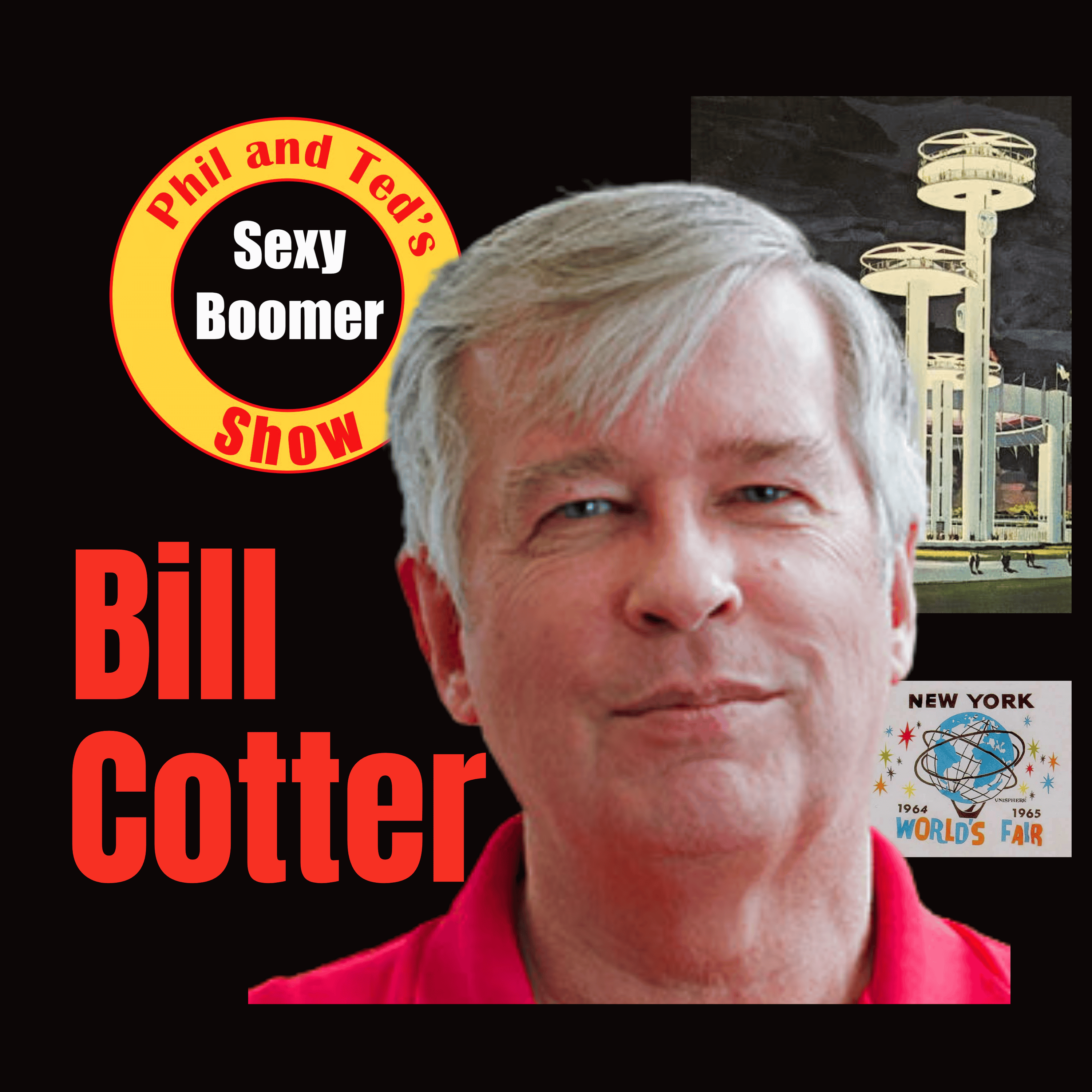


Takeaways:
- The significance of the 1964-65 and 1939 World's Fairs, highlighting their cultural impact and technological showcases.
- Robert Moses played a pivotal role in shaping the 1964 World's Fair, emphasizing his complex legacy as a master builder and controversial figure.
- The 1939 Fair introduced groundbreaking technological concepts, while the 1964 Fair faced societal challenges amid the Civil Rights Movement.
- Attendees of the 1964 World's Fair experienced a juxtaposition of optimism for the future against a backdrop of political unrest and social change.
Links referenced in this episode:
Companies mentioned in this episode:
- New York Telephone
- IHOP
- Coca Cola
- Texas Instruments
- Ford
- General Electric
- Sinclair Oil
- IBM
- Disney
- Pepsi
Foreign.
Ted BonnittTed's Sexy Boomer Show. I'm Ted Bonnitt. Hey, Phil.
Phil ProctorYes, I'm in Lewis, Delaware right now.
Ted BonnittWe have a really interesting show.We're going to be talking about World's Fairs, particularly the 1964, 65 World's Fair and the 1939 World's Fair in New York and the other World's Fairs. These were a phenomena. They reflected America's dominance after World War II.And there's just so many fascinating aspects of what the World's Fairs were. Our guest today is someone who grew up on Long Island, New York, as did I during that time. Bill Cotter, welcome to Sexy Boomer Show.
Bill CotterThank you.
Ted BonnittWhen I was researching the World's Fair, something that seems to be a fascination to so many people and yet not really talked about all that much, especially the 64, 65 World's Fair, because that happened on Long island in New York, in Queens. So we would drive the Long Island Expressway, we drive by the fleshy Meadow park, see these beautiful structures being built.And then at night when we went home, it was all lit up with fireworks and all that. It was just this magical sight that I spent, you know, two to three years watching every week. How was your situation?How did it come to your attention?
Bill CotterMy uncle worked for New York Telephone, and he was in charge of the crew that put in the phone lines at the fair. So all those fanciful modern space age telephone booths.Also little things like the main clock was at the Switzerland Pavilion and had clocks scattered around the fair and they were connected by phone lines, and he put all those in. So we'd see him for all sorts of family events, you know, Thanksgiving, Christmas, barbecues and that.And he'd be talking about, wow, now they're building a building shaped like an egg, you know, and, well, okay, you don't hear much of that. It's just, oh, this one today. You can't believe what we did today. And so talking to Uncle Bill got us interested.And then, like you, we would drive by to go to different events, things like Boy Scout camping trips and that. And you go by and you'd see the New York State Pavilion with the poles just sticking up. They didn't have the decks on them yet.And that's really weird. Yeah, most of it. Big interest was listening to my uncle describe what it was like actually working on the site.
Ted BonnittLet's set up what the World's Fairs were. They were expositions, really, that started in the late 1800s and in the mid 20th century. They were fairly regular.They would Appear in different cities at different times. And each one had a particular purpose and reason. The 6465 fair to me represented peak of empire. Post war World War II.The future is bright and beautiful. We were going to the moon. Anything was possible. We could go and see something called picture phones where we could see each other, talk on the phone.That was kind of remarkable.
Phil ProctorA little bit like we're doing now. A.
Ted BonnittYes, exactly. And who could forget the Belgian waffles? Right, that's where they introduced the Belgian.
Bill CotterWaffle, But, well, not quite. They actually introduced the Belgian waffle at the 62 Seattle World's Fair. Just like New York pizza and Chicago Pizza, two different pizzas.The Belgian waffle in the 64 fair was a much lighter, fluffier waffle. So if you go out, I have lots of pictures of people sitting at the 62 fair eating the waffles. And you can see they're heavier and darker in color.And the people that went there would say they were, you know, thicker in consistency. So I always tell people, if you want to win a giant barroom bet, bet people where the Belgian waffle came in. You got to say Seattle.But it was New York with a lighter, fluffier one that just absolutely took off. And that's the one you get generally if you go to an IHOP or something. Today it's the New York style.
Ted BonnittThe 64 fair was a money making enterprise. And let's set that up. We'd have to go back to 1939, the 39 fair, which was on the same grounds in New York.And the theme of that was the world of tomorrow.And I heard about it endlessly because when my father came over from Europe to go to school, college, his very first job in the new world was being a VIP tour guide at the 39 fair. He was a 19 year old kid and it was. He said it was the best time of his life.So every time he went to the 64 fair, I had to hear the grousing, this is nothing. You should have seen the 39. You know, the 39 fair.A group of concerned business leaders conceived the 39 fair in 1935 because it was just six years after the stock market crash and the global economic crisis, and there were 10 million Americans unemployed. And New York was particularly depressed and a bleak place. And these businessmen decided to change the tune and add a little hope.Unfortunately, World War II was breaking out, so that really hurt the fair too. And ultimately the fair lost money. And so the 64 fair was an attempt to Sort of revive the idea 20, 30 years later.The 39 fair was a vision of New York in 1960, the distant future. Bill, did the 64 fair come out of the 39 fair ultimately?
Bill CotterOh, yeah, Basically the whole fair cycle started in the US In a. Well, you mentioned earlier, they started back in the 1800s overseas, but they came into the United States.They had some fairly successful ones and introduced things like the Ferris wheel and all sorts of other inventions. But New York's 39 fair really got its impetus by the Chicago World's Fair of 1933, which was so successful, they ran it a second year. 34.And it was something really rare, World's Fair that made money.So when the people in New York saw that all the attention Chicago was getting and there was talk about bringing it back for the 35 season, New York started talking about, hey, why don't we do a World's Fair and try to jump start the economy, get us out of the mess of the Depression and all the rest of it. And they wanted to really establish themselves as a business place. You know, World's Fairs have great slogans.You know, the world of tomorrow, peace through understanding.But the real nut of it is it's businessmen and banks that come down that want to take their city and make it a trade hub and getting people to fly there, products in or buy products out or whatever. So 39 came along and if you actually look at any of the merchandise for the 39 fair, it all says the 1939 World's Fair.It doesn't say 1939, 1940, but everybody knew the 40 season was going to come along. But there's a group that licenses World's Fairs and they said you can only do it for one year, one season, Six months. Six months to the day.I mean, they're very specific on it, but so they said, we'll do the 1939 World's Fair.They did it and it lost money because a lot of these things are run by bureaucrats and they, they don't have the idea of how to run a business and they, they just start spending money on things and not thinking it through. So the 39 fair lost money, but they said, well, we've put all this infrastructure in the ground. The buildings are here, the, the roads are paved.Let's go and try it for 1940. And they put a different guy in charge. It did better, but it still lost money overall.But during all this, Robert Moses was the New York City Park Commissioner and he had wanted to make Flushing Meadows park in Queens, a park to rival Central park in Manhattan. Because before the 39th fair, that was basically was a garbage dump.All the ashes from all the incinerators and things, like if your horse died, they would drop it off at Flushing Meadows. So it was a. I didn't see that exhibit.
Phil ProctorYeah, the dead horse exhibit. Oh, my God. Was my favorite.
Bill CotterIf you read the book the Great Gatsby, they talk about the Valley of Ashes. And it was really a terrible, terrible place. So now this is a great way to kill several birds with one stone.Get rid of the dump and, you know, hire a whole bunch of people that needed work in New York because of the Depression and try to establish New York as the business center of the United States. So Moses, he was all for it because now he was going to get rid of his garbage dump and get a great park. Fair didn't make money.The great park that he wanted to do wasn't built. But then in the 50s, they had a fair over in Brussels in 1958 that did well.And people started saying, well, why don't we now post war, start having fairs in the United States? And a fellow named Robert Koppel came up with the idea of doing a fair in New York. And they were fighting with other cities.Chicago wanted it, Boston wanted it, a bunch of others. But Dwight Eisenhower decided that New York was the best possibility for it. And he gave the go ahead to the New York fair.And they hired Robert Moses to run it. And the first thing he did was fire the guy who would come up with the idea for the fair. So he was sort of typical Moses.
Ted BonnittThe President of the United States decided where the bears were going to be.
Phil ProctorYep.
Ted BonnittHow did that work?
Bill CotterIf you're going to have a world's Fair and it's in the United States, you wouldn't have the United States government decide that they're going to participate. It'd be pretty embarrassing if you said, we're the biggest thing in the world, but the government's not going to be there.So Eisenhower put together a team of people to try to figure out where they could get the biggest bang for the federal buck.And, you know, no offense to Chicago or Baltimore or some of these other places, but frankly, New York had more international connections for obviously shipping was a huge thing coming. People taking the transatlantic liners over.You had the airplanes and that could make a direct flight from London to New York, but they probably have to stop somewhere to get to other cities.So from an economic point of view, New York, that was the One that could attract more visitors and therefore they would see more of the United States Pavilion message. So he. He directed the State Department to fund it for New York.
Phil ProctorWell, the Firestine Theater did a very famous album called I Think We're All Bozos on this Bus, which was based on the inspiration of our experiences in these world fairs, particularly the Futurama aspect of it. Right. You know, the world of the future.And what we posited was, ironically, a fair that was run by the government and that was designed to make people feel good about the government that was controlling their lives. And it was very much like a theme park, a Disney adventure. And basically, isn't that.Bill, what led to the demise of these events that the theme parks have kind of replaced the World's Fairs?
Bill CotterYeah, there's several things that came to do it. And I sometimes say I feel guilty having worked at Disney and worked on the. I was one of the designers on Epcot and stuff.And everybody talks about being the permanent World Fair. Oh, yeah, yeah. There were a couple of things that came to be. One was mentioned earlier.You have these things run by bureaucrats and they don't necessarily think of things as a business. And that's one of the things. Like the 64 fair lost money. Lost a fair amount of money.I always joke, if you want to make $2 million at World's Fair, start with 5. You know, they don't turn profits. They really don't. But you had. You got to the New Orleans World's Fair, 1984, I guess it was.And it went bankrupt before the fair.
Phil ProctorWow.
Bill CotterYeah. The government had to stop in and loan it money to keep it going.And at that point, the United States decided, no more with World's Fairs, we're going to pull out of the organization that charters them. But they also had the issue even back at this point in time, partisan politics.You had this situation where if you're going to have a World's Fair in Delaware, where you said you are, right now, the senator from North Carolina or from North Dakota is probably going to say, what's in it for me? The representatives from Georgia or the representatives from Maine are going to go, what's in it for me?So what's the overall big picture of selling the country as a whole? And I've gone to a lot of World's fairs after the 64 World's Fair. And I can remember going to some of them thinking, I wish I had a Canadian accent.So that because some of the US Pavilions were really, really bad Very nice architecture. But the. Like the Expo 85, I guess it was in. In Japan, it was. It was really a fun thing to go to and everything.But the US Pavilion had nothing about what made the United States great. Nothing about, you know, cultural diversity and mixing people or industry.It said it was sponsored by Coca Cola and Texas Instruments and it was a giant commercial. And that's because the United States government says we're not going to fund it anymore. And any U.S. pavilions have to be privately funded.So when the government pulled out, it actually hurt US Participation in World's Fairs because you need a lot of money to tell a good show. And in some world's fairs, like the 64 World's Fair, the Expo 67 in Montreal, or you can go on.On Expo 7 in Osaka, the US money government put a ton of money in their pavilions, and they were some of the biggest draws at those World's Fairs. They really put the country on the map. But now we just. They still have World's Fairs. We just had one in Osaka, Japan.Just send it about three weeks ago, four weeks ago, maybe. But people don't hear about it much. They don't go anymore because now, you know, we've got EPCOT and other things to go to.
Ted BonnittThe 39 fair, for example, focused on the future, and they were trying to highlight new technology that could alleviate the human workload. How long have you heard that one? It was filled with all sorts of industrial tools and productivity.Then, like you say, there was Futurama, which ended up being the basis of the TV cartoon show Democracity.There were Pleasantvilles and Millvilles in the satellite towns in Democracity, which was promoting suburbanization and orderly separations of industrial and residential zones, had green belts and the whole thing. And Democracity was one of the most popular exhibits in 39, and then was really big on highways. Really big on highways.It introduced the American public to the concept of expressways and did lead to the federal aid highway tax bill. That man.
Phil ProctorI have to say that I have been with my dear friend Adele Abrams, who is our Washington correspondent. We've been whizzing around on all these superhighways, and I never see any people in the streets anymore or outside of their houses.The reason is they're all going somewhere. I mean, it just streams of cars and trucks, and they're all moving somewhere or they're not. They're just sitting on the highway waiting to move.
Ted BonnittThat was real future, though.
Phil ProctorYeah.
Ted BonnittThe interstate highway system Which Eisenhower championed, was akin to building out the trails of the Wild West. The government invests in the infrastructure and the people will come. So the interstate highway system was huge for this country. And that's right.And it was visualized alongside of Electro the robot, the wise cracking robot with a brain that featured 48 electrical relays. That was at the 39 fair. Yeah, it was all about the Future. And the 39 fair also introduced the world to color television.
Bill CotterBlack and white, because it was basically, they had done a demonstration at the Chicago World's Fair of tv, but it was really, really limited. So they.The first big public thing of television was at the 39 fair at RCA, but it was really strictly black and white TV, but it was the first commercially available when this, the one for the 33 Worlds Fair was bigger. And it went on, if it would fit in my office here, that the first one you could actually take home, put on a table and watch Something was 39.
Ted BonnittOkay, but did Chicago have a robot that could smoke cigarettes?
Bill CotterNo, no, they didn't have that. And in 39, not only did he smoke the cigarettes, but they gave him a robotic pet dog for the 40 season.
Ted BonnittNice.
Bill CotterYeah,.
Ted BonnittIt was costly. It cost 75 cents per adult to enter, 50 cents to park, which is roughly five times what it cost to see a movie. In 39.The average family earned about $1,500 a year and only had about $15 in disposable income per year. So a 75 cent admission price was pretty steep. And the 64 fare was, in today's dollars, about $20 a person to get in.
Bill CotterYeah, it was $2 for adults, a dollar for kids.But one of the things, you know, you mentioned like, you know, the price of a movie ticket, you know, if you bought a movie ticket, you were in and out in an hour and a half, two hours. If you bought the ticket of the fair, you could go in at 8 in the morning and be there until midnight.So you have to start, you know, trying to figure out your cost per hour. It's one of the ways I always try to justify to my friends how much Disneyland costs these days compared to a Broadway show or a Lakers game. It's.You're getting a good bargain.But yeah, the fair was, they did do things like they sold cheap tickets to school kids, so they, they would bring school groups in, that sort of thing. You could buy a book of 10 tickets, which were cheaper. It was basically like buy nine, get one free sort of thing.But the fair was very well attended but they, they spent too much money on building some of it and didn't get quite, get the attendance that they, they had anticipated. But the biggest issue for it was that they just didn't control their costs. If I'm spending money on this, well, you're going to spend money on that.Well then the next guy is going to spend money on that and the whole aggregate together. Then that, that was one of the big problems for 64 was that they sold all these advanced tickets.So many people were absolutely crazy about the idea of going to the World's Fair and again, you could buy a book of tickets, get a discount. So they got all this money in and they didn't realize that they had to use that money to keep the fair going for two years.So you know, because I might buy a ticket and I may come in April the first year, but I may not come until August or I may not come until the next year, but they've already spent that money. So now all of a sudden you still got to have pay the janitors to sweep the sidewalks and you got to pay the security guards and everything.If you're New Yorker, you may remember the name Abe Beam, he was the controller. Oh yeah, the books and said, you guys are crazy.You're spending all the money and this thing has got to run for two years and you're spending it all in your first three months. And that was a big part of the problem that they had.
Ted BonnittBill, I never understood that these were intentionally built as temporary structures. What's the difference between a temporary structure and a permanent structure? Because they have to be safe.
Phil ProctorThat's right.
Bill CotterYeah, they have to be safe, but they don't have to last as long.It's one of those things where you have to go and you look for things like, you know, wind loads for hurricanes and windstorms and that sort of thing. But you don't have to have a building that's going to last for, you know, X number of years.It's, you know, be like if you wanted to buy a house today, you know, do you get it with all the build on add ons or do you get to put a tent with tar paper in the backyard because you're only going to stay there for a week. And they did things like a lot of them were not insulated because nobody was going to be there in winter.So you didn't have to build insulation, you didn't have to put a heating system in because again, nobody was going to be there in winter.
Ted BonnittThey were seasonal Parks.
Bill CotterOh, yeah, yeah. The, the, the 64 fair ran for six months, closed, was shut for six months and open again. And in the winter they basically had a.Just like if you have a pool on Long island, you have to winterize it, or a sprinkler system, you got to blow out all the air water lines with air, cap it off, do that sort of thing. So most of the pavilions had no heating.Luckily they had air conditioning because it did get warm in summer, but it was totally shut down in a ghost town in between seasons.
Ted BonnittYou're listening to Phil and Ted's Sexy Boomer Show. Our guest today is Bill Cotter, a historian about the history of the World's Fairs. I want to talk about the 64, 65 fair. It's so interesting.And you can't talk about that fair without talking about Robert Moses and his influence on that.And for those who don't know who Robert Moses is, you know, he's considered good and bad as perhaps the greatest master builder of the century, if not the history of the US what he did in New York, he uniquely placed himself in a non elected position so he could do whatever was necessary in his mind without worrying about popular support. And so that was sort of a scapegoat for the elected officials to sort of let him do that.And he built this magnificent highway system around New York City, but it came at great cost. For example, the Cross Bronx Expressway just cut the borough of the Bronx in half and took out an amazing amount of poor neighborhoods.And he had a pretty rough reputation for being ruthless in that way. And this, by the time the 64 fair came around, he was interested in his legacy. Robert Moses was more into power. He worked as an employee of the city.So he didn't really have a lot of money and his daughter had cancer and he needed to better afford the treatment. So he was interested in the 64 fair on so many different levels to restore his legacy, to make some money.When he offered him the presidency, more importantly, he wanted a park in his name. He wanted the Flushing Meadow park to be his monument to himself.So he was working without really being transparent about why he put in permanent infrastructure and landscaping because he saw the future after the fair and to have this park, something as great as Central park, as you said in, in Queens, that would celebrate his legacy. And so he was asked to become president of the fair. He took it for maybe one or all of those reasons.And he was immediately controversial because a big tradition of World's Fairs were hoochie cooch shows and midways. And he decided he didn't want to talk about anything below the Adam's apple in terms of human anatomy. So he killed off the.The idea of these popular midways and hoochie cooch shows. That was actually the name Hoochie coochie show.
Bill CotterYeah, right.
Ted BonnittBut they were big money makers for fairs because people love that kind of stuff. So he had to replace it. So he called Walt Disney to help create attractions.Disney was interested because he was looking to see if there was a market for Disneyland on the East Coast. I believe they thought of making Flushing Meadow into a Disneyland east, but. But Disney didn't see it that way.And ultimately he went down to the Orlando area and opened up Disney World. Can you elaborate on all that?
Bill CotterMoses had done an awful lot. He had been the parks commissioner, and I think at one time he ran. I think it was 33 different bureaucracies for the city.And some of them were pretty major. The bridge and tunnel authority, things like that. If you follow all the good things he did, he built a tremendous number of parks.And you mentioned the roads.Like, if you're from Long island, like you and I were, you know, you drove on the Meadow State Parkway, you know, want to State Parkway, you know, all those roads out to Jones beach, all those things. The trouble is, he had all those successes, and sometimes you build on that and you don't realize that maybe you should stop.So he got the things like, oh, let's put a bridge across the Long Island Sound. Which was. And where did he decide to put it? Where some of the wealthiest people on Long island lived.And he thought he could just put it right through their houses. And they stopped his bridge.The poor people in Queens didn't have the same attorneys that the people in Long island had, so they ended up with the chorus Brown Expressway. But he actually had a plan, and you can see it online.He was going to put a highway right smack down the middle through Manhattan to get people Jersey faster, you know, so. And this was interesting because Robert Moses never drove. He. He always had a chauffeur. He never drove, but he was actually admitted to the car.But, yeah, he came in. The fair actually was first proposed for. For New York.They were thinking of putting it on Staten island because you need this big empty place of land. And they figured, oh, Staten island would be great. But at that point in time, Staten island was only accessible by ferry.And they weren't sure the Verrazano narrow bridge could be done in time. So they said, let's do it in in Queens. And that's when Moses turned around and said, queens, my park. And he got interested then.He wasn't at all interested in the beginning, but when they had done the 39 fair, they didn't have the money to tear out a lot of the stuff that was supposed to come out. A lot of the roads are supposed to be temporary. A lot of the utilities are supposed to be temporary. And they had to leave them there.So now they came by and said, hey, we've already got all this stuff buried in the ground. Let's do the 64 fair there. And that's what. When Moses came along and got big in it.But he made some real fundamental mistakes besides his accounting issues. One of the things he did was the Bureau of International Exhibitions.The guys I mentioned, Charter World's Fairs, say, you can only do World's Fair for six months. And Moses said, nope, got to be two years, because I got to do it and make enough money to build this park.If he had done the same nudge, nudge, wink, wink game that the 39 people had done to call it the 1964 World's Fair, get everybody to participate, and then say, oh, I'm Gonna Open in 65 as well. What are you going to do about it? He would have succeeded.But by him getting the BIE really upset with them, they made a blanket statement to their member nations. If any of you participate in the New York World's Fair, we'll never let you have a World's Fair in your country.So all of a sudden, the World's Fair didn't have the World. It's not a real good thing. And that's why they went to Disney and said, you know, hey, we need some help here.And as you said, Disney was thinking about the East Coast. They decided real, real early on, not New York, because of the weather, the fact that you just can't operate at 612 months a year.And also their experience with the New York unions was so horrific that that was the end of any discussions there. So they had actually approached Disney about running the 65 season if they kicked Moses out to try to fix some of the things he had done wrong.And Walt said, I won't do that to a friend. But in reality also, he just didn't want to deal with New York anymore.
Ted BonnittAll the construction, all the work was highly inflated. The contractors were handpicked. And they made the sponsors, the corporations building these pavilions, to rent their buildings back.I mean, it was really sort of a money Grab Moses thought he was.
Bill CotterDoing a good thing.He got the unions to agree to a no strike clause, because one of the things they were really worried about was, what if you got the pavilions half built and then, I don't know, the plumbers or the groundskeepers or whatever union went on strike. So he made the deal that you won't go on strike, and I'll pay you a ton of money not to go on strike. He also did some really stupid, stupid things.And again, I like Moses because I love going to Jones Beach. I love the Wanton State Parkway, I love the World's Fair, but he did some really dumb things.And he was, okay, you know, I'm going to let you build your pavilion or whatever, but you got to use my janitors and my custodians, and they're going to charge you an absolute fortune. I mean, the amount of money that they charge some of the pavilions for, the simple thing of, like, taking out the trash was horrific.I mean, they really raped and pillaged these people. But he got what he wanted. He didn't have a strike. The fair opened on time. So I guess in retrospect, maybe he was right.I'm just glad I wasn't paying those bills.
Ted BonnittAnd the theme of the 64 fair was Peace through understanding, which is kind of ironic considering that President Kennedy had been shot a year before. There was growing protests. It was just starting with the Vietnam War. It was a very difficult civil rights time. A lot of fighting in that respect.And there were some protests. Both fairs were kind of protested.
Bill CotterYeah, it was. The 39 fair didn't have a lot of protests. 64 Did.When you got to keep in mind, though, when they came up with the name Peace through Understanding, we were having the Cuban missile crises. I. I can remember tanks going down Sunrise highway and, you know, hiding under your desk because you were going to get nuclear bombed.So the whole thought there was, maybe we can bring the world together and be peaceful and get to know your neighbor sort of thing. It was a great theory. But unfortunately, as time went on, things changed. And you mentioned early on, like, Moses with the hoochie coochie shows.I mean, actually, in that one, he turned out to be right, because Seattle's shows that tried it lost money. So they probably would have lost money in New York. But he went so over the top with things like we're gonna.One of his favorite musicians was Guy Lombardo. So he gave Guy Lombardo a thing. Other people like the Rolling Stones want to play.Oh, not at My fair, you know, you're not going to get any of those long hair hippies that playing at my fair. He went so middle of the road and so 1950s.So by the time he got the 1960s and everybody's embracing the Beatles and everything else, he was in another generation and he did not let that sort of stuff come into his fair.So like the Singer bowl where they play tennis and everything today, it was a huge, wonderful outdoor facility that you could have said come in, pay for the fair during the day and listen to, I don't know, the Beatles at night. Oh no, not at my fair. So it sat there empty.
Ted BonnittThe number one song in 64 was I Want to hold you'd hand by the Beatles.
Bill CotterThey could have played the World's Fair. He didn't want it.
Ted BonnittAnother interesting controversy at the 64 fair was Andy Warhol. And he sparked a minor scandal because he had a set of public commissions for the exterior of the Philip Johnson New York State Pavilion.Yeah, Philip Johnson designed it. And Warhol chose to enlarge mug shots from the New York Police Department's booklet featuring the 13 most wanted criminals of 1962.It was a massive grid, 48 square inch panels featuring each of the criminal's profiles. It was installed April 15th of 64 but, but it was too hot and they just painted it over with silver paint.
Bill CotterThat came more from Nelson Rockefeller because the thing went up and at that point in time the one of the names were picked on it were Italian Americans. And Rockefeller was very, very sensitive to losing the Italian American boat.So he expressed his displeasure with it to Moses who then got to tell Warhol to take it down. Warhol decided he wasn't going to take it down, so in an act of protest he painted it over silver paint.So when you came by there were all these other pieces of artworks surrounding the theaterama building and this giant silver rectangle that sat out there.
Ted BonnittOne exhibit that was palatable was Disney's It's a Small World. And then he moved that down to Disney World. The actual exhibit. Right.
Bill CotterWell, first of all it came to Disneyland.And if you still go to Disneyland today and you walk behind the scenes, it still has the original painting labels about where it's going to get installed back at the Pepsi Pavilion on the back of the flats. The things you don't see if you're riding through the boat.When the World's Fair closed the very next day, there was a truck from Disneyland taking the boats. And the picture in the New York Daily News of a Crane loading the boats to take them out to Disneyland.Because that was one of the big reasons Walt did it. Besides finding New York, audiences would go to, as he said, his corny Midwest shows. He now had all these shows that were paid for.We all talked at Disney about using opm, other people's money. And we use other people's money to build the World's Fair. So now he put the Pepsi stuff on a truck, brought it out.He took the dinosaurs from Ford, put them on a truck, brought him out Mr. Lincoln, Etc. So, yeah, it made a huge hit. And now today you can go to any Disney park in the world. And they say it's a small world.The music is always playing somewhere 24 hours a day.
Ted BonnittDefinition of insanity. He used other people's money, Disney did at the World's Fair to sort of develop this exhibition technology.
Bill CotterOh, yeah.
Ted BonnittVery smart move on his part. You know, I'm 39. He was still very interested in animation, but by 64 he's worried about his legacy and his visions of Disneyland and Disney World.So, yeah, he worked that pretty well. Some of the cool things at the 64 Fair, the Ford Mustang Magic Ride, the Corvette Stingray was debuted there.And that was when they had given all the original astronauts Corvettes. Weren't they on exhibit there as well?
Bill CotterWell, no, the strollers. If you look at kids being pushed around in a stroller, and they were all done by Hertz, they were miniature Corvettes.So they didn't have the real cars there. They might have had one at the GM pavilion on display or something.But every kid in a stroller, you had a Corvette with a little steering wheel and you felt like you were in going out in style.
Phil ProctorYeah, I remember that. That was great. Yeah.
Ted BonnittAnd the Vatican had an exhibit. Their pavilion had the Michelangelo's Pieta. I remember that very well.
Bill CotterYeah, that was a huge thing. There's actually a really nice book a woman did about how it took to get that thing there.And my dad was in the shipping business and he was involved with one of the companies as far as bringing it over here. And I tell you, he rested much easier once it got back to the Vatican. He was scared to death something would happen on his watch.And he was very happy when it got back home. But Yeah, I mean, GM was the biggest thing. They had their Futurama 2, which again was going to be all highways.And it was, thank God they didn't do what they did.They were going to have big machines, were going to take the Amazon Rainforest, chew them into the front of the machine and put a paved highway out behind you with the lines already on it. Kind of crazy stuff, but, you know, they were number one. And then Ford, you know, with their Mustangs and dinosaurs number.I think Payton may have been number two and Ford was number three. But Disney had four of the top 10 shows of the fair. It was definitely a. Walt was the showman behind the fair. He helped put it on the map.
Ted BonnittSinclair Oil's Dinoland, remember the dinosaurs and IBM? They presented basic computers.
Bill CotterYeah. Very interactive thing. You won in a grandstand that rose up, took the audience up into this giant egg. And there were about 22 screens in it.So it was really a very big multimedia things where things would pop on the left, pop on the right, go on. But they explained how a computer works and it just decides a one or a zero and what does that mean?And it was like, well, do we go down this track or do we go down that track? And they explained how your life can be changed by the computer.What really made a big thing, I think it was one of the things that got me into the computer business was you could actually sit at a computer terminal and put in thing like the day you were born.And it would come back and tell you what happened on that day or ask for your favorite recipes and it would tell you how to make chocolate cake or whatever.And people could now actually touch a computer and get something out of it as opposed to this back room with the guys in the white coats and everything. So all of a sudden there was all these predictions that you can do your homework on a computer. I mean, stuff that back then seemed futuristic.Now it's just every day.
Phil ProctorThat was really the basis of our album, which was that everything was controlled by a computer. And I played a character who was a. A hacker. And I planted a virus in the mainframe computer. Dr. Memory, directory memory.And brought the whole fair to its knees.
Ted BonnittAnd Steve Jobs was a big fan of Fire Sign for prior some of those reasons.
Phil ProctorThat's right. When I met him, he expressly talked about the album and how it influenced him and actually made him more.Encouraged him to develop the home computer for everybody. For a while he had an Easter egg in there. You could say to Siri, this is worker speaking. Hello. Which is how I got into the computer on the record.And she would say, hello, Aklem. What service can I perform for you? LOL. And that went on for like 10 years. Thank you, Steve.
Ted BonnittGeneral Electric promised to feature an actual demonstration of atomic fusion.
Bill CotterThat was Something that was done by the GE up in Schenectady. And they had a big hope at that point in time. There's always a big confusion about what is nuclear fusion versus nuclear fission.You know, confusion bang in a big way.
Phil ProctorRight.
Bill CotterWhich is ironic because that's what I worked on when I got out of college on that sort of technology. But, yeah, the whole concept was there. Now, later it gets called cold fusion and other stuff.But they at that point in time thought that you'd be able to have a small nuclear fusion reactor in your car to drive it around town.
Ted BonnittYour Pontiac, son.
Bill CotterYeah, yeah, they really thought that was going to be. And they had a great demonstration. And there's one of those kind of lost Disney things where you went in.They had a whole thing about the power of the sun and the hydrogen explosions that occur there. And now we're going to take that and bring it in here and come to the next room. And they had this dramatic music.And then the thing would blast, this giant thing of light, and they would say, we just generated X number of volts of electricity. And unfortunately, they found out it's one of those things you could do it, but you couldn't do it scale of any size scale.And it also was one of those things where, you know, like, they just got rid of the penny because they said it cost five bucks to make a penny or something. But they found out that they can make electricity a lot cheaper than they could do it through the fusion process.
Ted BonnittBut it left the audience glowing for sure. At the 39 fair, the British Pavilion received a bomb threat. The bomb was discovered and removed by policemen at the fair.And they went to a remote area and they found some fledgling bomb squad in the New York City Police Department. And these two detectives inspected this package and the bomb detonated. And they killed both the detectives. Yeah, you don't hear about that much.They were suspected to be Nazi sympathizers because the World War II was happening.
Bill CotterWeren't sure if it was Nazi sympathizers or Irish sympathizers because of all the Brits things going on with the British. But if you go to the New York City Pavilion was now the Queens Museum.There's actually a plaque on the outside commemorating the two officers that were killed. And it's still carried on the books of the NYPD as an unsolved murder that, you know, they would still like to.To put it into if anybody ever can uncover anything.
Ted BonnittWow. And the 6465 fair was in the middle of the Civil rights movement. And there were protests and violent protests across the country.And there was an organization called Brooklyn Corps and they wanted to disrupt the 64 fair. They wanted to throw something called a stall in. What was that about?
Bill CotterThere was no doubt whatsoever that there were racial issues going on. Even the building of the fair. A lot of the unions just wouldn't let the minorities be part of it.And it built up a lot of resentment towards the amount of money going into the fair, but it wasn't going into the minority communities.So one of the things they thought was if the whole world is coming to New York, because we're going to be doing an NBC special on the opening of the fair with Henry Fonda, we're going to be doing all these things. What better way to get interest for our cause than going in and having every news story about the world's Fair have to mention us?So they came up with the idea of the stolen that you would go and take your car and just stop it in the middle of the highway, stop on the Major Deegan or whatever and just get out of your car and walk away. The big mistake they made though. Well, they made a couple.One of them was that you don't generally get people interested in your organization by causing inconvenience to others. Which we find every time there's a sit in or anything on a highway here.
Phil ProctorYeah, that's right. Yep.
Bill CotterAnd they also, the police found out about it.So the police put tow trucks all up and down all the roads and they were all ready that if anybody did anything and they'd say, basically we're going to tow away your car and you may not see it again. A lot of people decided not to actually do the. The stolen. And it was a rainy day. They didn't leave their car and walk away from the highway. So.But they did block the subways, they did block the entrance to the fair and the Pinkerton guards had to haul some of them away and did it not so, so gently in many cases. But yeah, that was a big thing that they were trying to get more publicity for their organization.
Ted BonnittBut there was a lot of pushback because of this development at all costs.And urban renewal was a big sticking point because a lot of what Moses did not only take out entire neighborhoods to put in highways like the Cross Bronx Expressway, but he also took down ghettos, as they called them then, and then allowed private developers that land to develop housing that wasn't going to include the people who were dislocated.
Phil ProctorYeah, it's Funny, Moses didn't part the Red Sea. He parted the Bronx.
Ted BonnittThe South Bronx.
Bill CotterRight, yeah. Moses theory at that point in time was that the city didn't have the money to build new developments, but private industry could.And, you know, if you worked in a government, private partnership, take down these buildings because some of them are in really, really bad shape. Take them down, put in another building, and now people could live in better ones.But again, being a bureaucrat, he didn't realize how much of these companies would sometimes try to cut their costs. And the buildings they put up were not very good. And then also the rents charged the people were not particularly favorable.So utopian themes and plebeian execution.
Ted BonnittSome things never change.
Bill CotterNo.
Ted BonnittAre we ever going to see World's Fairs again?
Bill CotterYeah, yeah. There's another one coming up. I can't remember where the next one's in like two years in Abu Dhabi, I think it is. So they're again around the world.The United States did rejoin the Bureau of International Expositions. They are trying to up the game as far as the quality of the US Pavilions for it.So I remain much more optimistic now about it than I would have, say, five years ago at this point in time. The United States, I don't know. I mean, I get approached all the time by cities that are looking to do a World's Fair.They come up and they go down and, you know, once they hit the fact you just need a giant piece of land, where are you going to put these things? Most cities don't have giant pieces of land.So as soon as they get into that, and then, you know, oh, we're going to spend all this money and disrupt all the city for six months. The people in the city generally say, I don't want it.
Ted BonnittAnd like we said earlier, we have theme parks, we have shopping malls and outdoor shopping plazas. And it sort of takes that concept to the, to another level and sort of makes the, the World's Fair almost obsolete.
Phil ProctorI can't wait to see the, the new ballroom in Washington D.C. and then the, the giant arc of Trump. You know, I think D.C. is going to be the next site of the, the, the World's Fair, or unfair, if.
Bill CotterYou will, that's a world of different tomorrow.The other thing about World's Fairest that hurts is that right now, any company that invents something like when Apple announces their new phones, they go on sale tomorrow, announcing what you're going to do two, three years from now, your competitors are going to get there before you so everybody holds all their R and D really close to their chest and they don't talk about this stuff for the future until, hey, it's on sale tomorrow at Best Buy.
Ted BonnittBill Cotter, thank you so much for joining us. Bill's a World Fair historian.If you want to learn more, go to billcotter.com. That's c o t t e r billcotter.com. He has all sorts of information about it. And also your friendly YouTube. Stop. Just search 39, 64. World's Fair. It's all there. Thank you so much, Bill.You've been listening to Phil and Ted's Sexy Boomer Show. I'm Ted Bonnitt.
Phil ProctorI'm Phil Proctor. And forward into the past.


