Dead Playwrights, Live Audiences: Some Stories Still Need a Room
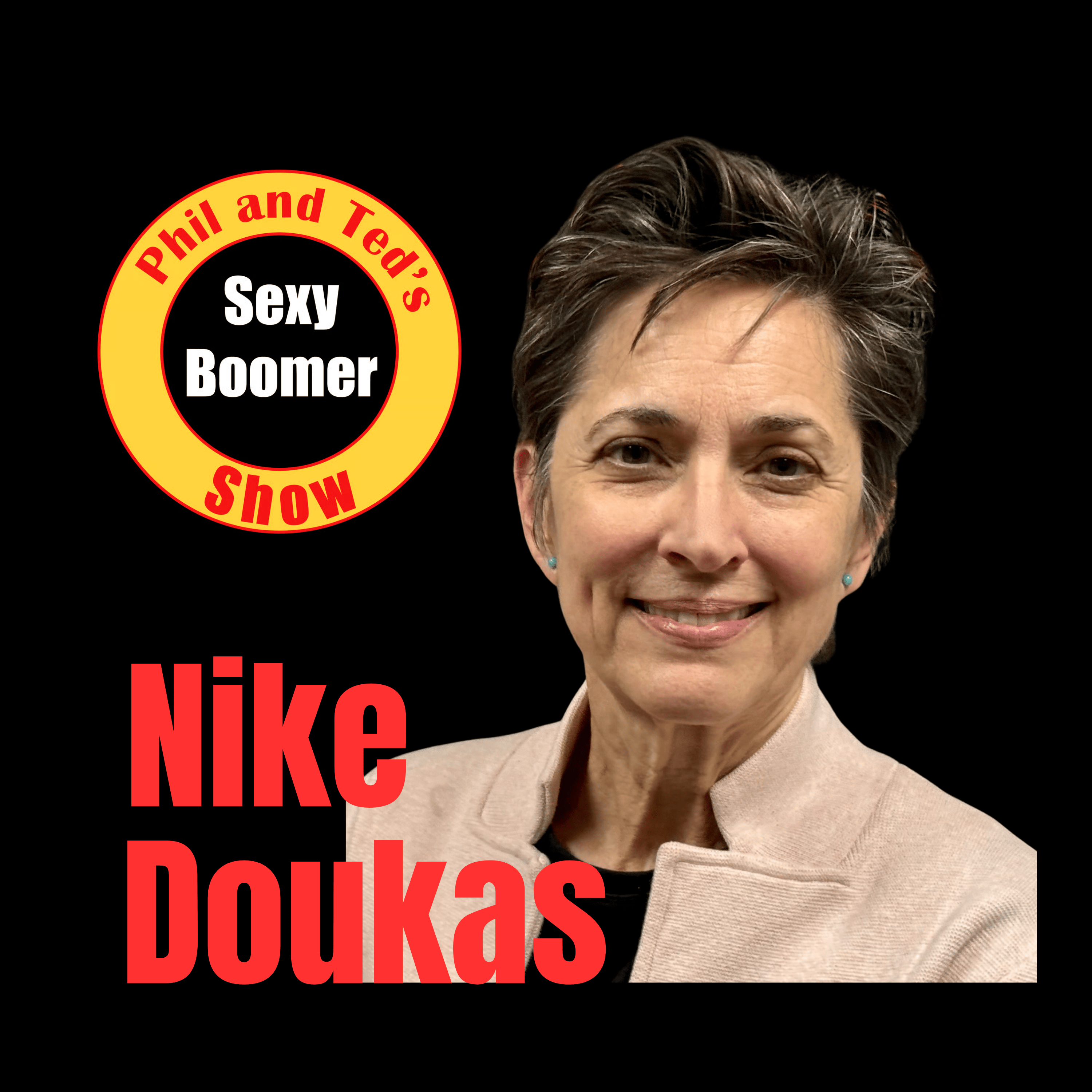


House lights down. Phones down. There's a human on stage — and apparently, that still matters. Turns out the wild, improbable comeback of live theater is being led by the generation everyone assumed was glued to a screen. Nike Doukas of the Antaeus Company makes the case — passionately and persuasively — for the unrepeatable experience that no phone, no stream, no home theater system can touch. The stage is alive.
Nike, Phil and Ted dive into the vibrant world of Los Angeles theater, exploring the meaning and importance of classic plays in our modern world. Nike shares insights about the origins and mission of Antaeus, the enduring power of live performance, and how theater is adapting in a post-COVID era. From immersive productions and educational initiatives to the unique energy of live readings, this episode is a celebration of the communal magic that only live theater can offer—and why it just might be booming more than ever before.
Takeaways:
• In this podcast episode, we explored the significance of the Antaeus Theater Company, emphasizing its commitment to classic plays and the importance of community engagement.
• The artistic director, Nikay Ducas, elaborated on the process of selecting plays that resonate with both the audience and the ensemble, ensuring a thoughtful approach to theater production.
• We discussed the unique adaptation of Antigone, which is set in a post-apocalyptic context, showcasing the relevance of classical themes in contemporary narratives.
• The episode highlighted the challenges faced by theaters during the COVID-19 pandemic and the innovative approaches taken to maintain audience connection through radio plays.
• An emphasis was placed on the need for theater to adapt to modern audiences, including initiatives like 'pay what you can' nights to enhance accessibility for all patrons.
• Finally, we reflected on the enduring power of live theater to foster a sense of community and shared experience, which cannot be replicated by film or digital media.
antaeus.org
sexyboomershow.com
info@sexyboomershow.c
Welcome to Phil and Ted's Sexy Boomer Show. I'm Ted Bonnitt.
Phil ProctorAnd I'm Phil Proctor. And why don't we say I'm Phil Proctor and you're Ted Bonnitt after all these years. I mean, Ted. Phil is like. Rhymes with dreadful.
Ted BonnittYeah.
Phil ProctorAnd Phil. Ted is like filtered, which is what we do here. We filter out all the bad news and just stick with the good news.
Ted BonnittOkay, then. Welcome to Phil and Ted's Sexy Boomer Show. I'm Phil Proctor.
Phil ProctorAnd I'm Ted Bonnitt.
Ted BonnittGood to see you.
Nike DoukasGood.
Phil ProctorSo much better.
Ted BonnittMuch better.
Phil ProctorToday we have a good friend of mine and a cohort who will be talking to us about theater and predominantly about our theater company, the Anteas Company. Ladies and gentlemen, our artistic director, Nikay Ducas.
Nike DoukasOh, I like that pronunciation.
Phil ProctorThank you. I'd break a plate if I could.
Ted BonnittWelcome to the show.
Nike DoukasThank you.
Ted BonnittYou probably had the easiest commute of any guest ever. Your office is around the corner.
Nike DoukasWalking distance.
Ted BonnittThe Enta's Theater.
Nike DoukasFirst, I have to tell you, it's the Antaeus Theater.
Phil ProctorAntaeus comes to us.
Ted BonnittI'm glad I got that right.
Phil ProctorWell, you know, it's like Fireside Theater. What? Fireside what? You know, why do we do use these names? But the story of Antaeus is based on the Antean.
Nike DoukasA Titan. A Greek Titan.
Phil ProctorA Greek Titan.
Nike DoukasAnd don't ask me what Titans were.
Phil ProctorOh, they were big,.
Nike DoukasBig people. And this one held up the sky with one hand and had one hand on the earth.
Phil ProctorThe foot. He had a hand on the Earth.
Nike DoukasYeah. Which we thought was a good symbol for what we do.
Phil ProctorRooted in the classics.
Ted BonnittFamily member of Artemis and Apollo.
Nike DoukasSee, you know more than I do.
Ted BonnittI don't. I'm just saying that. I mean, I'm 0 for 2 here.
Nike DoukasI just still don't know. I still don't know what the difference between a God and a Titan is. And that's something I should look up.
Phil ProctorI don't think a Titan is a God.
Nike DoukasI don't either, but can you tell me what a Titan is?
Phil ProctorForm of God.
Ted BonnittYou're looking at.
Nike DoukasThat's absolutely.
Phil ProctorThe Romans had lots of gods.
Ted BonnittAnd the children of Uranus.
Phil ProctorI beg your pardon, Gaia.
Ted BonnittAnd ruled the cosmos before the Olympians, led by Cronus and your producer, Donna Walker.
Nike DoukasThat makes it so much clearer.
Phil ProctorBut see, now we know.And of course, one of the reasons that we're talking about emphasizing all this gift Greek stuff, besides the fact that you are of Greek ancestry, is because the next play that we're going to be doing is Antigone.
Nike DoukasYes, It's a new adaptation by Kenneth Cavender, who is a Greek scholar and who we've done another play by him when we were in our old space before we moved to this one. And it's a really.
Phil ProctorWas that the Oedipus play that I was in? Oh, yeah, that was.
Nike DoukasOh, you were in that? See?
Phil ProctorI sure was, yeah.
Nike DoukasWell, this one is a lot shorter than the one you did in about an hour and 20 minutes. It moves like a bullet. And it's sort of. He set it.It's very much the play Antigone, but he set it in sort of a post apocalyptic unnamed mid Eastern country. And the set is gonna be absolutely gorgeous.And instead of having, you know, traditionally Greek plays, a group of people who sort of challenge the protagonist. And in this case, he sort of made the chorus to soldiers who start the play.And there's another character who sort of comes in and takes on the voice of the chorus as well. It's a really beautiful adaptation.
Phil ProctorWell, you know, the last piece that was mounted at the theater, All My Sons by Henry Miller.
Nike DoukasArthur.
Phil ProctorHenry. Arthur. I met Henry Miller, by the way. Tropical cancer. Right.Was of the most beautiful and moving and well presented acting things I've seen from the company.
Ted BonnittYou are the artistic director of Anteas?
Nike DoukasI am the artistic director.
Ted BonnittWhat does the artistic director do for a theater?
Nike DoukasWhat doesn't the artistic director do? The artistic director, in our case, it's slightly different because we're a company, a membership company. So we have about 150 members.Only about 50 of our members are active. Some of us have, you know, gone to New York, retired, whatever.
Phil ProctorDied.
Nike DoukasSome of us have died.
Ted BonnittNot just on stage.
Phil ProctorNo, no, no, not just on stage.
Nike DoukasJust clarifying that we've even had some incidents on stage, but I won't go into that anyway.So I'm responsible to the membership because I choose the plays and what the season's going to be, but I have to choose plays that are good for our company.
Phil ProctorRight.
Nike DoukasAnd we're we. So one of the things I do is I choose the plays. I oversee the auditions, I consult on all the productions. I direct one production a year.We have three productions a year. And we also have Classics Fest, which I know we're going to talk about later.So I choose all the plays, I help cast them, and then when they're in technical rehearsals, I come in and advise and an advisor to the director.And I'm in the lobby every performance, greeting Our audience because we're trying to get closer to the Glendale community and our theater community in general. And we also have an academy. We have a long tradition of education.
Phil ProctorWonderful, wonderful academy.
Nike DoukasYeah. We're full of scholars and teachers. Many of our actors are teachers.
Phil ProctorYes.
Ted BonnittHow long has NTS been in existence?
Nike DoukasWe're just about to celebrate our 35th anniversary.
Ted BonnittAnd your focus as a company are the classics?
Nike DoukasYes. We do classic plays every year. Do one Shakespeare, we do one American classic. That was all my sons.And we do one world classic, which in this case is Antigone.
Ted BonnittHow is public interest in classics these days?
Nike DoukasAll my sons was at 97% capacity. So we're.
Ted BonnittCongratulations.
Nike DoukasYeah. It's been very gratifying. And I think one of the reasons is because I think we have an extraordinary ensemble of actors.
Ted BonnittAbsolutely.
Nike DoukasWe have actors who work regionally all over the country. And we were founded by actors who were doing film and television but were trained in the classics and wanted to keep their chops.
Phil ProctorWere you with the comedy from the beginning?
Nike DoukasYear two, Year two. They needed ingenues. That's how old I am.
Phil ProctorThey needed ingenues.
Nike DoukasYeah. They realized they had a bunch of seasoned actors.
Phil ProctorMy late wife, Melinda Peterson, also joined the company.
Nike DoukasShe joined the company a little after I did and brought you along just like I brought my husband along.
Phil ProctorLeo Marks. Wonderful, talented. We actually began at the Mark Taper Forum.
Nike DoukasRight. Gordon Davidson, who was the artistic director at the Mark Tabor Forum, sponsored us. And for a number of years we just.We were sort of a group that just met every Monday night and read plays out loud. And sometimes we'd study a play for a year. And then we started doing these readings and we got very hot.It turned out that people really wanted to come and hear all these amazing actors read plays out loud. And so that became sort of our signature for a while. And then we moved to North Hollywood.We were there for a couple places and we slowly started producing plays. And when we moved to the theater in Glendale, which is a really beautiful 80 seat intimate, it was built for us, wasn't it?
Phil ProctorDidn't we?
Nike DoukasIt was built for us.
Phil ProctorYeah. It's a beautiful space.
Nike DoukasYeah. And we have a black box and we have a beautiful library where we have a partnership with the Glendale Public Library.We have the largest collection of theater literature west of the Mississippi. And you're allowed to browse our books while you're waiting to see the show.And so if you have a Glendale library card, you can borrow books from there.
Phil ProctorOh, that's Wonderful. Great.
Ted BonnittLos Angeles as a market for theater seems to be pretty healthy.
Nike DoukasI know we have such a reputation and of course, we are an industry town, but the theater industry is quite lively in our city.
Ted BonnittYeah, we've been raving about the productions we've seen recently. Amadeus at the Pasadena Playhouse, beautiful production.
Phil ProctorAnd west side Story, I was talking about at the Nocturne Theater, Kim's Convenience, which has been.
Nike DoukasYou said you saw Master Harold and the Boys.
Ted BonnittYep.
Nike DoukasAnd then there are all these small theaters, smaller, what we call mid sized theaters like Antaeus, who are more intimate spaces. And there are so many of those.
Ted BonnittYou weren't artistic director back during the COVID days, but how did you survive that? I mean, it's great to see theater seemingly coming back big time.
Nike DoukasIt really is.
Ted BonnittHow do you see it from a business level?
Nike DoukasWell, what happened during COVID And again, I was an artistic director then. But they. We were very fortunate. Our supporters were very helpful in keeping us alive. But also we decided to produce radio plays.And there was this brilliant idea by our former executive director, Anna Rosa Halloran, of doing the zip code plays. It's called Various zip Codes in Los Angeles. We had original plays written because at that time we had a playwrights lab.We were also doing new plays in those days, which we don't do anymore. But you can go on our website, nts.org and you can hear these radio plays. And we really expanded our viewership from those plays.There's a play about 91201 in Los Angeles. So I did one. I did one that was about how it was fascinating. You may have heard of this, Bill. The Nazis were actually quite active in Los Angeles.And there was a building where they were gathering and having all kinds of wundhal. There you go.
Ted BonnittThe one that's in Will Rogers.
Nike DoukasExactly.
Ted BonnittThe ruins of an enclave. Of course, it was German built, so it'll last like the pyramids. It's all cement and steel.But if you walk about a mile into the canyon behind Will Rogers, you'll come across these ruins.
Phil ProctorReally?
Ted BonnittYou could tell it was German. Just the construction and the quality. And there's a Bunthal.
Nike DoukasIs it still there? Because I know Will Rogers. His home burned down, right?
Ted BonnittYeah. These are concrete ruins. So there's still there. I'm sure they're still there.But there were three of these Nazi enclaves in America, two outside of Washington, Bunkers which did prior to World War II. There were two around D.C. and there was one here in LA.They were intended to take over the government, when the Nazis invaded successfully, the U.S. so the location in the Will Rogers area was to take over the Hollywood propaganda machine. Evidently, the two outside of Washington were also busy.Everybody knew where they were, and as soon as we declared war on Germany, they just went over and arrested them. That was the end of it.
Phil ProctorThey knew where to fight.
Ted BonnittThe Nazis were here.
Nike DoukasSo anyway, that was one of the ways we survived Covid.
Ted BonnittWow. Did you do it on Zoom?
Nike DoukasIt was amazing. They came to my house with a box, and in the box were all the things I needed to set up my own studio in my house.And remotely we recorded these radio plays.We have this amazing guy, Jeff Gardner, who's one of the premier sound designers in la, and he was sort of responsible for making sure all the sound worked. Our director was on a camera talking to her. It was extraordinary.
Ted BonnittSo after Covid, getting back into the habit of going out again. Not easy, especially because demographically, theatergoers are pretty old, aren't they? Well, or usually well, but.
Nike DoukasYou're right, but we have been so fortunate. I mean, it's something. I'm really focused on bringing young people in, but for some reason, we have been really lucky in our lobbies.I don't know if you noticed when you were there that night. We have a really healthy demographic of young people, and it's thrilling.
Ted BonnittI'm starting to see that now, too. In all the theaters that I'm going to.
Nike DoukasI think no matter what they say about AI and no matter what they say about everybody's on their cell phone, all of that is true. I think the younger generation is really hungry for being in a room with other people and having live experience.We got the greatest compliment when we. Our first play of the season was Cymbeline by Shakespeare. Very rarely done Shakespeare. And we do student matinees.We have a deal with the Glendale public.We do two student matinees for each show, where we have high school kids come in and their teacher sent us some of their comments, and a couple of them said, I did not look at my phone once. I was so excited.
Ted BonnittHow nice.
Nike DoukasSo I thought, we can't get a better compliment than that.
Ted BonnittAll this concern about attention spans being broken. You see these micro dramas on TikTok, which is a big business now.
Nike DoukasYep.
Phil ProctorYeah.
Ted BonnittBut they're saying this is because people can't sit still.
Nike DoukasI think they're right.But I think that when you offer things like this, from the little I've read, I think that young people recognize there's something lacking in their Life.I keep hearing about these clubs where these kids say, we're going to have a club, and for an hour we put our phones in a basket and we don't use our telephones. I think they're starting by experientially realizing they're missing something. And I think that's why they want to experience things like that.
Phil ProctorYou know, one of the things that Adele and I did on our last adventures back east was to see a play on Broadway, Schmigadoon, in its previews, a wonderful, funny musical parody of musical comedies. And the audience was absolutely the most involved and spontaneous audience I've ever felt. And I think that's part of it too.People are reveling the idea, especially in these scary, dark, weird times, that we can all be together. And whenever there was a line that even had any kind of a political implication, oh, great reaction.
Nike DoukasI think it reminds us that we need.
Phil ProctorThat we need to be together.
Nike DoukasThat's why people keep coming.Because when they get there and they realize how, whether it's comedy or whether it's drama, I need to hear this and I need to be with other people experiencing it. That's. It's addictive, but I think it's medicine for us right now.
Ted BonnittYeah, well, you see it in the late night monologues. The call and response to the audience is, now they're in it.
Nike DoukasThat's great.
Ted BonnittNothing can beat great theater.
Phil ProctorNo, it's true.
Ted BonnittIt really can't.
Phil ProctorAnd it stays with you.
Ted BonnittBut you would think the classics would be a pretty hard sell.
Nike DoukasI just feel like, again, for the same reasons, as far as Shakespeare goes, I feel like people are very intimidated by Shakespeare if they're not die hard Shakespeare fans.
Ted BonnittRight.
Nike DoukasBut I know that our company is a group of actors that makes people feel comfortable with Shakespeare. People come up to me in the lobby all the time and say, I understood this. I had no problem. I enjoyed it so much.
Phil ProctorIt's important.
Ted BonnittHow do you do that?
Phil ProctorThe actors have to know what they're saying. And we really spent a lot of.
Ted BonnittTime interpreting the dialogue.
Phil ProctorYeah.A dramaturg, you know, like Dakin Matthews, a master of the classics, will come in and we'll read the play, and he'll explain things we may not understand, which puts us in the reality of what's going on. Also, a lot of the interpretations have been very playful. Cymbeline was set in the west, and I remember. What's the magical play they used the radio.
Nike DoukasThe Tempest. That was the Tempest? Yeah.
Phil ProctorYou directed that? Yes. Well, that was, again, a very exciting kind of out of the frame approach to a familiar play.
Nike DoukasAnd yet people said to me that was the. I heard lines I had never heard before.
Phil ProctorExactly.
Nike DoukasI understood the play in a deeper way. That's the goal, always. Yeah, that's true. I never want to rewrite a play. I want to do Shakespeare's play. I don't want it to be Nicky Dukas Tempest.I want it to be Shakespeare's Tempest.But I feel like the way you do that is by studying the play really, really deeply and understanding at every level what it's about and getting actors, and some of it's just training and experience who understand how to make the words come to life.
Ted BonnittYou're not changing the words.
Nike DoukasNever.
Ted BonnittJust in the way in which you deliver them.
Nike DoukasOccasionally, if there's a word. First of all, some of the plays are very long. Cymbeline. I cut quite a bit. I'll cut any joke that's not funny.And I believe that Shakespeare wanted me to do that. Because if there was ever a showman on earth, that was William Shakespeare. And I don't think he won any jokes that weren't funny anymore.But if there's a word that's critical to the plot and it now doesn't mean what it means, I will find a word of the same syllable length and substitute it if it doesn't sound odd. But other than that, that's fair.
Phil ProctorYeah, yeah. But as I was saying at lunch, we saw Eddie Izzard's Hamlet and he changed a few things for clarity. And I found it jarring.Now, the way that you're talking about it is it's melded into the rhythms of the play so it would just embellish it. But he had a couple of times where he changed a very famous word. For instance, in the to be or not to be monologue.Instead of calling it a bare bodkin, end your life with a bare bodkin. He called it something like a sharp.
Ted BonnittA Sharpie?
Phil ProctorYeah, a Sharpie. We'll just write that part out. And it was jarring. It was like, wait, no, no, that's a bare bodkin, for Christ's sake.And he did the thing of, you know, stabbing himself. So you knew what it was.
Nike DoukasI think there are some words that are archaic, but they're so sort of like the King James Bible. Not that I know anything about the Bible, but that it doesn't matter if you can't understand it. If the actor plays it with intention.You get the idea. And the Language is so beautiful, you don't care. But if it's gonna obscure the meaning, that's when I change.If I feel like we're leading the audience down, they're gonna misunderstand what we're trying to do here.
Ted BonnittIt's intentional on the actor's part in terms of how they're delivering it.
Nike DoukasThat makes the difference, the way you say something to someone. I mean, you can watch a foreign movie and follow a lot of what's going on just by intention.
Phil ProctorIntention, that's right.
Nike DoukasBut these plays are in English. And when you know how to do it, you can understand most of it.
Phil ProctorThat's right. And the actor really. The rehearsal period is a time where we find that proper way to express something that we know is gonna.The other actor will understand it, and therefore the audience will understand it.
Nike DoukasYeah. And then there's the physical, too. I mean, you paint a picture.
Phil ProctorThat's right.
Nike DoukasYou create an environment, all that. Yeah.
Ted BonnittA person goes to see a film or goes to see a play. What are the advantages of the play?
Nike DoukasThe advantages is that the actor is right in the room with you. And in our case, they're about 2ft away from you, which is pretty thrilling. The other thing is, theater is literature and film is pictures.If you're looking to see a story told by the visuals, then you should go to a movie. If you're looking to see a story told through language, if you're somebody that language really speaks to, you want to go to see a play.And I mean, I think both art forms are beautiful. I don't.
Phil ProctorWell, you know, the kind of physical design that we've been doing at Antius recently, I think adds immeasurably to the experience.Because you do kind of, when you walk into that little space in that beautiful theater, as an audience I'm speaking now, you are immediately in the play. You know, there's a wonderful. The intimacy really does allow you to feel a part of.
Nike DoukasI agree with that, Phil. In fact, all my son set people kept saying to me, the grass came right under my feet.
Phil ProctorYeah, yeah. And all my sons.
Ted BonnittRight. Yeah. I'm thinking of some theatrical experiences. When I was in Amsterdam, I didn't know what I was buying. I just bought a ticket. I was, I love you.
Nike DoukasYou're my ideal theater goer.
Ted BonnittAnd I heard about. And I was like, I really didn't understand. I can't read Dutch, you know. So I bought a ticket to see this show.I get on a boat and go across the river to a shipyard. And we go into a shipyard and there's a dry dock.
Phil ProctorOh, my God.
Ted BonnittAnd it's a giant dry dock. And inside the dry dock is the set. It was in a post apocalyptic show about people who were ruled by overlords.And they had a huge, like, sort of world Nazi World War II tower with spotlights and the whole thing.
Nike DoukasOkay, so movies can't do that.
Ted BonnittNo, no. And I'll tell you what else they can't do is that as the show goes on, I know the river is about 40ft above us. That was kind of interesting.I was about the first or second row. And the climax of the play was an apocalypse. And they started to open up the gates.
Phil ProctorOh, my gosh.
Ted BonnittAnd water started coming in.
Phil ProctorOoh, big leaves.
Ted BonnittAnd everybody's like, whoa, this is cool. And it's coming up and it's coming up and it's coming up. And of course, they had it all timed.
Nike DoukasYeah.
Ted BonnittSo it stopped as it lapped this far from the tip of the toe. End of show.
Phil ProctorThat was. That's truly immersive.
Ted BonnittThat was really immersive. And then Blue Man Group, we went to see them when they were in previews.
Phil ProctorIn Vegas?
Ted BonnittNo, New York at the pap. Whatever the theater was back in. We had covered it for our NPR show. So we were all invited to go see a preview of it.And no one knew who they were or what they were doing.And there were these coils you'd use for like a dryer exhaust, plastic pipe hanging down over like 20 or 30 of them kind of hanging over the audience. And we just grabbed one and said, yeah, I'd like to have pepperoni pizza, please. Ten minutes later, they came in with a pepperoni pizza.Who ordered the pepperoni pizza?
Phil ProctorOh, that's again, that's theater.
Ted BonnittRight.
Nike DoukasThese are great examples. Theater's happening in real time and mistakes get made. And the actors are responding to the audience.Whether the audience is aware of it or not, the actors are playing to that audience who's there on that day. And every performance is slightly different. It's just like it's a pleasure to read a play. It's a pleasure to read a play by Shakespeare.It's a pleasure to read a play by Arthur Mither. But it is not the same thing to see that play, to experience that play.
Phil ProctorHowever, you were saying earlier that we have also become very adept at presenting readings of works.
Nike DoukasYes, that's a beautiful segue to something that's coming up very soon.We got sort of famous for our readings and A reading for people who haven't seen it in is simply actors standing in front, behind music stands, without any costumes, without any props, and just reading you the play over and over. People come up to me in the lobby who say to me, I could see the set.Or they tell me they remember a set from a reading they saw a few years ago today. And I think to myself, there was no set. You were just watching actors read a script.When you have really good actors reading you a play out loud, performing a play, they're not reading it, they're experiencing a play. It's a really magical experience because your imagination is so engaged and you start imagining what the house looks like.You start imagining what the costumes look like.
Phil ProctorThat's right.
Nike DoukasAnd you're helping to write the play.
Ted BonnittThat's kind of like the interactive nature of radio. In order to comprehend it, you have to stimulate your visual cortex. For example, I look just like Robert Redford and Phil.You Charlton Heston, I'd say, well, thank you.
Phil ProctorI was on television during the Easter holidays, by the way, I saw you there.
Ted BonnittYeah, nice.
Phil ProctorI'm wearing the same makeup I was wearing in Ben Hur right now.
Ted BonnittFrom what I'm seeing firsthand in theaters, there's more excitement and audience going to theater than they are to the movie theaters at this point.
Nike DoukasYeah. I guess the movies are struggling a little bit because people can do it at home. You can't do theater at home.
Phil ProctorThat's right. That's right. And, you know, movie theaters now are a very kind of empty experience, which I always loved.
Ted BonnittI always went to Netties on purpose.
Nike DoukasI do, too. But I think most people like to go screening.
Ted BonnittNo. Even despite the AMC's attempts to put in Barco Loungers.
Nike DoukasRight.
Ted BonnittI mean, it's.
Nike DoukasI feel bad about that, though, because seeing a movie in a movie theater is a very different experience than watching it.
Phil ProctorTotally.
Nike DoukasYeah. I really try to make myself go because it's so easy to stay home and watch a movie.Just like when you go see a classic movie from the 40s and you see it on screen for the first time and you realize what you've been missing watching it on television growing up.
Ted BonnittIt's interesting to think about consuming drama in all these different ways.
Nike DoukasThere's so many ways to experience it. So these readings are music stands on an empty space, lights up, the actors read the play, lights down. And we. We started doing this.Well, we've done it. Like I said, we've done it from the beginning. And then when we were in North Hollywood.We did this thing called Classics Fest where for a week or two we would have a series of plays that we'd read out loud. And we Covid was one of the things that knocked that off of our ability to do.And thanks in part to Phil and to Adele and to the memory of Melinda Peterson, who was a huge classics fan supporter, we have been able and also many of our company members really stepped up in support of this because it's so important to them and other friends. We're going to have our back to our Classics Fest this year. We're going to read three plays. So each play gets read twice.We're doing Candida by George Bernard Shaw, A Moon for the Misbegotten by Eugene o' Neill and a new adaptation by Richard Eyre, fairly new, it's a few years old.Of Ghosts by Henry Gibson and all really good plays that are a way for us to explore the play and just a way to share more material with our audience.
Phil ProctorWe also, when we were doing Classics Fest, we would gauge the excitement of the audience in terms of some of the plays we were reading in and it could become a main stage production.
Ted BonnittDo you have like a pre show lecture to explain this?
Nike DoukasYou know, we do a lot of that. We have for every play that we produce, we have classes that go with them. You can come for the weekend and study play.You can do it on a single night. And we all have, we always have talkbacks. We have all kinds of educational opportunities For Classics Fest, it's more of a whirlwind experience.You can come on a Saturday, see two plays.Well, last year, and I'm hoping we were doing this again, we had a buffet lunch that you could have between the shows so you can spend the whole day immersing yourself.
Ted BonnittPlus all the books.
Nike DoukasPlus all those books. You can do a little research on your own.
Phil ProctorThat's right.
Nike DoukasThat's right.
Ted BonnittThat's wonderful.
Nike DoukasYeah. But you know, you've given me an idea. I mean, because maybe there'll be something we'll be able to do in advance of it that just a little.
Phil ProctorYeah, it might create a little excitement.
Ted BonnittWell, especially for people who are coming to Shakespeare for the first time.
Nike DoukasOh, for Shakespeare, we definitely do that. We have a class called Getting to know whatever the play is Cymbeline and. And Dakin taught that class for a weekend. Two four hour classes.You read through the play, you talk about it, you talk about the challenges for actors, you talk about different productions. We're doing it for Antigone right now.We Have a weekend class, and I think it's a Wednesday or Thursday night class that you can take, and that's on our show.
Ted BonnittSo it's sort of a Shakespeare for Beginners.
Nike DoukasWell, you know, we actually get a lot of knowledgeable people. It's a really nice mix because. And so there's always a lot of lively discussions, and it's really more. Less of a class and just more.
Ted BonnittOf an exploration and a website.
Nike DoukasI should say that we spell our name A as in Apple, N as in Nicky, T, A, e, u, s. Auntias.org antias.org yes. But you can always call us if it's too complicated to remember how to spell our name.
Ted BonnittNow, you are an actual by trade as well.
Nike DoukasI am. I started as an actor. In fact, one of the first television shows I ever did was with Phil. You may not remember that.
Phil ProctorYes.
Nike DoukasOh, yes.
Phil ProctorA Diary of a Terrorist.
Nike DoukasYes. And then they changed it to Terrorist on Trial. This was in the days of tv.
Phil ProctorSam Waterston was the lead.
Nike DoukasYes. And you were so kind. Because I had such a thing for Sam Waterston because I had seen him in Much Ado, and you introduced me to him.
Phil ProctorOh, yeah. Okay.
Nike DoukasI mean, as an actor, I just thought he was so.
Ted BonnittAnd you came out Originally?
Nike DoukasI grew up in Massachusetts, but I went to graduate school at the American Conservatory Theater in San Francisco. And then I came down to la. And so I was a classically trained actor in la. And then for many years, I did a lot of television.And then I went back to my true love, which was theater. And I was a big regional theater actor for a long while. And then.And then about 15 years ago, I was teaching, and I've taught acting for a long time as well. And I started directing. I just. I had always wanted to. And I sort of fell into it. And so for the last 15 years or so, I've also been a director.
Phil ProctorWonderful progression.
Nike DoukasI feel so lucky because I just feel like everything I do, I love. So that's a good thing.
Phil ProctorThat's.
Ted BonnittBoy, that's so important, isn't it? I mean, you get to a point in your life where you just. If you're gonna do something, you better enjoy it.
Nike DoukasYou're so grateful. And when you're young, you just. It takes so much work and you just wonder if anyone's ever gonna see you.And finally you get to a place where people do.
Phil ProctorThe one great thing about acting to me, though, is that you're in a family. When you're in a play, you're in A family. And you're all working together to create something that's greater than your own little part in it.And it's a sustainable, wonderful way to live. And when you're not doing it, you're learning your lines.
Nike DoukasYeah, that's right.
Phil ProctorSo that it's a very immersive thing.
Nike DoukasI think that's why people respond to our actors in our company, too, because so many of us have been in this company for so long. I mean, obviously we also have to bring in the young actors, and we have wonderful new young actors. But when you come see our shows, you get this.You get a real sense of a shared vocabulary.
Phil ProctorYou really do.
Nike DoukasA deep bench and deep experience of people who really work well together.
Phil ProctorYeah.
Ted BonnittAnd no, AI can't get away with the AI. Not yet, at least.
Phil ProctorThere will be AI in the future.
Ted BonnittNT's Holographic Productions presents Poisoner, hopefully won't.
Nike DoukasBe around for that.
Ted BonnittThat's another reason why theater will become more relevant rather than less relevant. Right.
Nike DoukasI think.
Ted BonnittAnd hope organic.
Nike DoukasThat's right. And you know what I mean. I think this is what we were getting at earlier.I think why people are keeping interested in classical plays is because I think you go back because, you know they're going to. They're always teaching you something. These plays work. We know these plays work.I mean, if you're a theater person, you know, play's going to work, see it. But. Which is not to say anything against new plays, because that's really important and exciting, too. But.But I do think there's something so thrilling about seeing a play written by an ancient Greek or written by William Shakespeare or by Arthur Miller and feel like nothing has changed in terms of the human condition.
Phil ProctorYes.
Nike DoukasThere's a human condition that we all share and that we can be comforted by that. We can be challenged by that. We can be inspired by that. We can be warned by that.And there's something really deep and profound about seeing these plays over and over again.
Ted BonnittFrom the 60s on, things got very experimental, very liberal, anything goes. Maybe there's a cyclical nature of, okay, been there, done that. This idea of a traditional play, a classic.
Nike DoukasYeah, maybe.
Ted BonnittYeah.
Nike DoukasI think everything is cyclical in the arts.
Phil ProctorRight.
Ted BonnittAre there any playwrights now that we don't know about or that you know about?
Nike DoukasI mean, we have so many great playwrights. Lynn Nottage, I think, is one of the great American playwrights. She's written many beautiful plays. She wrote a play called Intimate Apparel.That, to me, is a perfect play. A Perfect play there.There's just a lot of great playwrights are also writing for television, which I feel a little sad about because it's taking them away from the stage and because there aren't a lot of plays being produced in New York right now. Most new plays are being developed in the regional theaters, which is great expenses, primarily. Well, people haven't had a habit of coming to.They want to see musicals when they go to New York.
Phil ProctorThat's right.
Nike DoukasI'm hoping that's starting to change now, but I think we have many amazing writers writing right now. Beth Woll is a great playwright. There's so many. And I'm gonna be bad about remembering names.
Ted BonnittAre there companies here in town that are usually pushing in that direction that are known to do new plays?
Nike DoukasYeah, Rogue Machine, the Fountain does a lot of new plays. They sort of do a mixture, but I think they mostly do new plays. The Road does a lot of new plays.And, you know, PRT in Venice, they do sort of a combination. They do classics like they're where you're gonna. You've. You were going to go see the Price there.They also have company members who write and develop new plays. So, yeah, there's plenty of stuff.
Phil ProctorNow, mentioning all these theaters, is there some kind of an alliance of artistic directors where you can talk about what works and what doesn't work?
Nike DoukasThere's an alliance that's just for theaters. There's nothing specifically for directors. But I'm actually thinking about starting one.
Phil ProctorAh.
Nike DoukasAh.
Phil ProctorOkay.
Nike DoukasI'll let you know.
Phil ProctorYou heard it here.
Ted BonnittWhat would you say the difference between, say, New York and Los Angeles in terms of the theater scene? It seems like LA is really strong, the amount of people going out to see them.
Nike DoukasThere's far more people going to see theater in New York because they have a certain number of houses of that size. We have a lot of small houses, but we have the Geffen, we have the Album, we have the Taper, the Pasadena Playhouse.
Ted BonnittThe other thing I'm noticing in theater more is the sound design. It seems to be getting more sophisticated.
Nike DoukasYeah, I think everything is. I mean, hopefully everybody gets better as we go on. But yeah, we have this.Like I said, our sort of company member, he started as an actor is Jeff Gardner, and he's able to do things in our theater. He really is where the seats vibrate, you know, when exciting things happen, and is extraordinary. And I think you're right.It's probably to do with technology that we're just able to do more than one.
Ted BonnittWell, now, we can direct sound.
Nike DoukasThat's right. It can come. If you have a sound of a doorbell, it can come from where the door is.
Phil ProctorAnd you can do that on a more intimate level with the same kind of wonderful effect.
Ted BonnittYou gotta compete with home entertainment. It's like bringing back smell o vision.
Nike DoukasYeah, I. I do think that's. I do think that's where some of the impetus comes from. How do we get them out here and do something you can't do at home?
Ted BonnittPeople are inundated and suffering subscription fatigue, and they're raising prices all the time. Even going to a movie is a financial commitment. A play is even a bigger financial commitment.
Nike DoukasIt is. It is what I would say is what people pay to go to see the Dodgers play. I would say you can have just as good a time.I mean, I love the Dodgers, but you can have just as good a time coming to see us. And if you come during preview week, which is the week before we open, we have six performances.I believe the tickets are $35, which is very, I think, reasonable. And we have student rates, and we have group rates, so we're always trying to.And next season, we're going to offer a pay what you will night so that if you can only afford to pay $10, you can pay $10.
Phil ProctorGood for you.
Nike DoukasBecause I think. I think it's really important that everybody who wants to see a play can.
Phil ProctorSee a play and to build the subscription base.
Nike DoukasYeah.
Phil ProctorOh, gosh, I enjoy that so much. I want to come back.
Nike DoukasBut, you know, it's amazing what we will pay for what we will pay for a drink. And then if you think about. So would you pay $40 to see a play when you're paying $7.99 to have a drink? You know, $7.99.
Phil ProctorThat's a pretty good deal.
Ted BonnittThat's a really good deal.
Nike DoukasI wasn't even thinking of a mixed drink. I was thinking of a coffee.
Ted BonnittWell, we are out of time.
Phil ProctorAre we?
Ted BonnittYeah. Can you believe it?
Nike DoukasThat was so quick, you guys. I know. Thank you.
Ted BonnittOur good friend and artistic director of the Anteas Theatre Company. And I'm so happy that theater is doing so well in Los Angeles.
Nike DoukasThank you.
Ted BonnittEspecially post Covid. It's wonderful to see.
Nike DoukasI think people want to come out and experience life again.
Ted BonnittYeah.
Phil ProctorYes, absolutely.
Ted BonnittAbsolutely. Nike Duokas is. Thank you so much.
Nike DoukasThank you for having me.
Ted BonnittYou're listening to Phil and Ted's Sexy Boomer show. You can hear all our shows at: sexyboomershow.com. It's a winning title, isn't it? Sexyboomershow.com and we would love to hear from you as well.And we also need new customers to the Facebook page because Facebook closed us down and we had a restart, and we have five followers. So please go to the Facebook page and look for the Sexy Boomer show and join up and we'll have all sorts of news for you. Sign up for a newsletter.Have a newsletter and write us. Tell us what you're thinking. Yeah.
Phil ProctorWhat you'd like to hear on the show.
Ted BonnittAnd you can do that at info@sexyboomershow.com. That's it.
Phil ProctorAll right, my friends, stay safe. Keep your head down.
Ted BonnittHave a good week.


